New “State of the Climate” Report released

For the last 35 years, scientists around the world have collaborated on an annual assessment known as “State of the Climate.” Since 1996, the report has been published in a special issue of the Bulletin of the American Meteorological Society, and this year’s “State of the Climate in 2024” has just been released. The report is a collaborative effort by 600 scientists from 58 countries worldwide, and it features important updates on key climate metrics for the atmosphere, land surface, and oceans, from the polar regions to the tropics.

This year’s SoC report highlights the societal impacts of high atmospheric humidity—which has been rising steadily over the past 50 years. High humidity magnifies the impacts of rising temperatures on human health because sweating is less effective—making it even more difficult to cool down on hot days.

Since 2018, the SoC report’s section on Global Climate has also featured a section on phenology, with PhenoCam data, along with John O’Keefe’s observations at Harvard Forest, playing a key role. The 2025 report also includes an analysis (see figure below) of spring phenological anomalies, calculated by the USA-NPN using Mark Schwartz’s “Spring Index Models” (SI-x) compared against anomalies detected at 10 PhenoCam sites across the lower 48.

Mostafa’s Live2 phenocam paper published in AFM

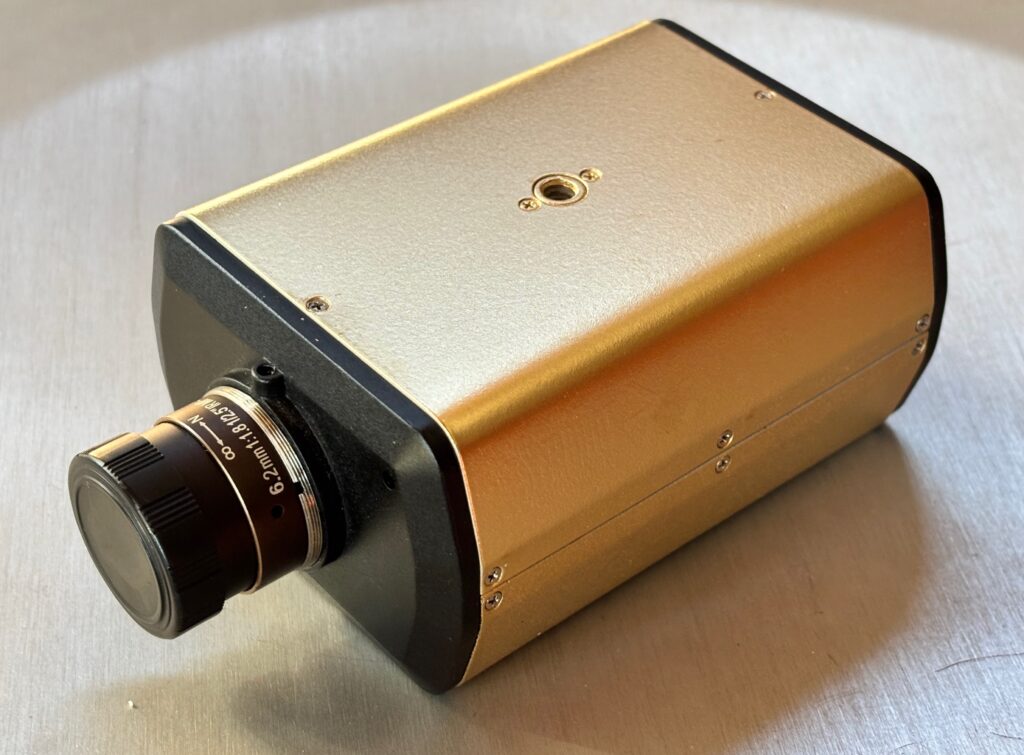
After more than 15 years relying on the StarDot NetCam SC as the standard camera for the PhenoCam Network, supply chain issues associated with COVID-19 led to the phasing-out, and eventual retirement, of this ultra-reliable IOT device (the Harvard Forest and Proctor Maple Research Center NetCam SC phenocams, both installed in April 2008, are both still running and have together recorded over a half-million images, and the NetCam SC had been previously installed at over 800 PhenoCam sites worldwide, from Massachusetts to Madagascar). The StarDot Live2 camera was suggested as a possible successor, but the off-the-shelf model lacked some essential features needed for phenological applications. Former lab member and BlueGreen Labs founder Koen Hufkens worked extensively with StarDot hardware engineer Dan Lawton to develop the custom firmware and configuration scripts that would enable the Live2 camera to be a viable replacement for the NetCam SC.

Mostafa, Francisco (a visiting PhD student during fall 2024), Koen, and Andrew conducted extensive testing and analysis to ensure that the Live2 camera would be a worthy successor to the NetCam SC. Their analysis has just been published in Agricultural and Forest Meteorology. A key-takeaway is that the comparable performance of the Live2 to the NetCam SC ensures good continuity in phenological data, thereby supporting the PhenoCam Network’s efforts to serve as a long-term phenological observatory that provides the highest-quality phenological data derived from near-surface remote sensing.

Thank you Koen and Dan for your efforts, and Francisco for your visit!

Lily Newton visits from New Mexico Tech

Lily Newton, an ecohydrology PhD student at New Mexico Tech (Andrew is an external member of her committee) traveled from Socorro, New Mexico, to Flagstaff to learn more about the lab’s work and to share her planned PhD research with the group. During her 3-day visit (thanks to Jen for hosting Lily and giving her a place to stay!), we had a well-attended happy hour at Wanderlust and lunch at Swadee Thai, and Lily had the chance to interact with lab members and learn about the kinds of science we do, and how we do it (phenocams, trace gas measurements, dendrometers, flux towers, and so on). Some of Lily’s work will be conducted at the Sevilleta National Wildlife Refuge, where Jacob and Andrew are collaborators on the Mean-Variance Experiment.

The photo shows Oscar, Mostafa, Lily, Perry, Darby, Jen, and Connor in front of Swadee.

Carbone Lab REU Delaney Watkins presents Snodgrass methane flux poster

Delaney Watkins, an NAU undergraduate and summer 2025 REU program participant hosted by Prof. Mariah Carbone, worked on the Snodgrass Mountain project funded by the DOE ESS program, on which Mariah is the lead PI and Andrew is a co-PI. Delaney measured soil fluxes of methane and carbon dioxide along the Snodgrass elevational gradient using the lab’s LI-7810 CO2/CH4/H2O trace gas analyzer, and found that in both aspen and conifer-dominated stands, subalpine forest soils were consistent methane sinks. She presented her poster on this work at the final NAU REU symposium in early August. Close to 10 Richardson-Carbone lab members showed up to hear about her work. Great job, Delaney, and we look forward to seeing you around the lab in the coming year!

WildWEST Summer Camp @ Historic Hat Ranch

Jacob, Jen, and Andrew made the trip out to NAU’s Historic Hat Ranch property, west of Williams, AZ, to participate in the WildWEST project’s 2025 Summer Camp. WildWEST (Wild-area-networks Wireless Enabling Science Team) is a $5m infrastructure project funded by NSF’s Office of Advanced Cyberinfrastructure and led by PI Scotty Strachan (a long-time PhenoCam collaborator) of the Nevada System of Higher Education. WildWEST aims to develop the infrastructure, and train workforces, needed to implement “end-to-end data transport solutions for science in remote and challenging environments.” Andrew is a collaborator on the project and serves as a member of the Science Stakeholder Use Case team; his talk focused on some of the challenges the lab has faced in developing two-way communications solutions for projects at the Bartlett AmeriFlux site, the Sevilleta LTER’s Mean-Variance Experiment, and redwood groves at Santa Lucia Preserve. Jen and Jacob had the opportunity to learn about current infrastructure technology and network with WildWEST project leads from Arizona, Utah, and Nevada.

Thanks to Scotty for inviting Andrew and lab members to participate! See you all again in 2026!

The photo shows Andrew, Jen, and Jacob outside of the HHR Straw Bale House.

Thermal image from Niwot Ridge camera published in Science

In early June, Science magazine published a special feature on how plants experience and cope with heat, and how this varies across spatial, temporal, and biological scales. The impacts of rising temperatures and extreme heat on vegetation are critical for ecosystem productivity and resilience, and the ecosystem services on which human society is highly reliant.

While lab members did not have a paper include in the special feature, we did score what might be the next coolest thing: a photograph from the FLIR thermal camera that Andrew and former postdoc Don Aubrecht had mounted on the Niwot Ridge AmeriFlux tower in 2015 (and which ran until 2021) was used in the lead-off article.

Plant temperatures – clearly a hot topic!

Calling all Snoddies!

In late June, Andrew joined “Team Snoddy 2025” (Mariah, Austin, and REU Delaney Watkins) on a week-long trip to the Rocky Mountain Biological Laboratory in Gothic, CO, to conduct research around Gothic (top photo) and on the nearby Snodgrass Mountain. The weather was perfect, and well-suited to replacing sensors, rewiring battery boxes, downloading dendrometer data, measuring soil CO2/CH4 fluxes (bottom photo, showing Delaney mastering the LI-COR 7810) , and inventorying trees. The tallest tree measured was a 34.5 m Engelmann spruce!

ALAN outweighs temperature in lengthening urban growing seasons

Ever wondered how artificial light at night (ALAN) and the urban heat island (UHI) together impact plant phenology? Check out the new paper (with Andrew as a coauthor) led by Lin Meng at Vanderbilt, “Artificial light at night outweighs temperature in lengthening urban growing seasons”, published this week in Nature Cities!

The figure below, from Lin’s paper, shows how increasing impervious fractions results in a concave quadratic increase of air temperature (Ta) and exponential increase of ALAN from rural to urban areas. The longer exposure to ALAN and higher Ta collectively contributes to a longer growing season, represented by the advancement of the SOS and delay of EOS in urban areas compared with rural areas.

Oscar participates in water & energy flux workshop

In mid-June, Oscar gave a tour of his equipment at the Cedar Mesa AmeriFlux site (also part of the Utah Flux Network) to a group of about 10 researchers and professionals who were part of the “Water & Energy Flux in the Desert” workshop led by Paul Inkenbrandt (Utah Geological Survey). A highlight for the participants was Oscar’s sap flow instruments, and discussion topics included how the collected data could be used to quantify specific components of the ecosystem water budget. Oscar noted, “Thank you to Paul for the opportunity and all workshop participants for their attention!”

The below photo shows Oscar giving a show-and-tell of one of his instrumented trees, which also features a Tomst dendrometer. Photo by Patrick Engberson. 

End-of-year lab lunch at Delhi Palace

To celebrate the end of the 2024-25 academic year, the Richardson and Carbone Labs went out for a group lunch at Delhi Palace. Although the famous lunch buffet is no longer offered, the curries and naan were amazing as always, and nobody went home hungry.

Thanks to all lab members for their efforts over the last 12 months, it’s been another great year. Best wishes to everyone for a productive but relaxing summer.

From L to R: Austin, Gena, Connor, Oscar, Mostafa, Jen, Perry, Yujie, Andrew, and Mariah (Jacob and Darby were unfortunately out of town). Note the Richardson Lab t-shirts that Oscar and Jen are sporting!