
Back in the redwoods!

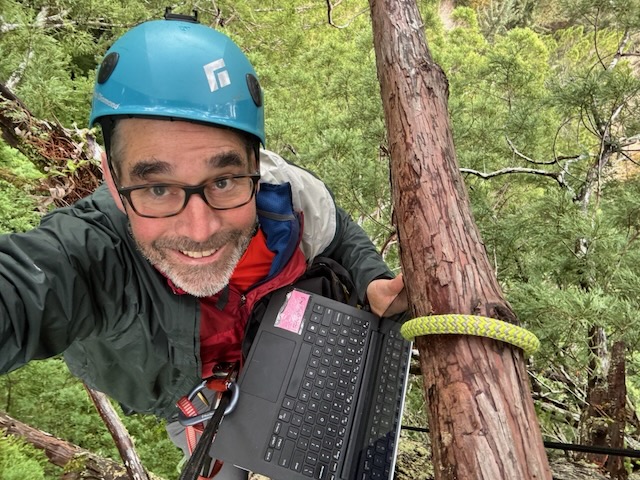
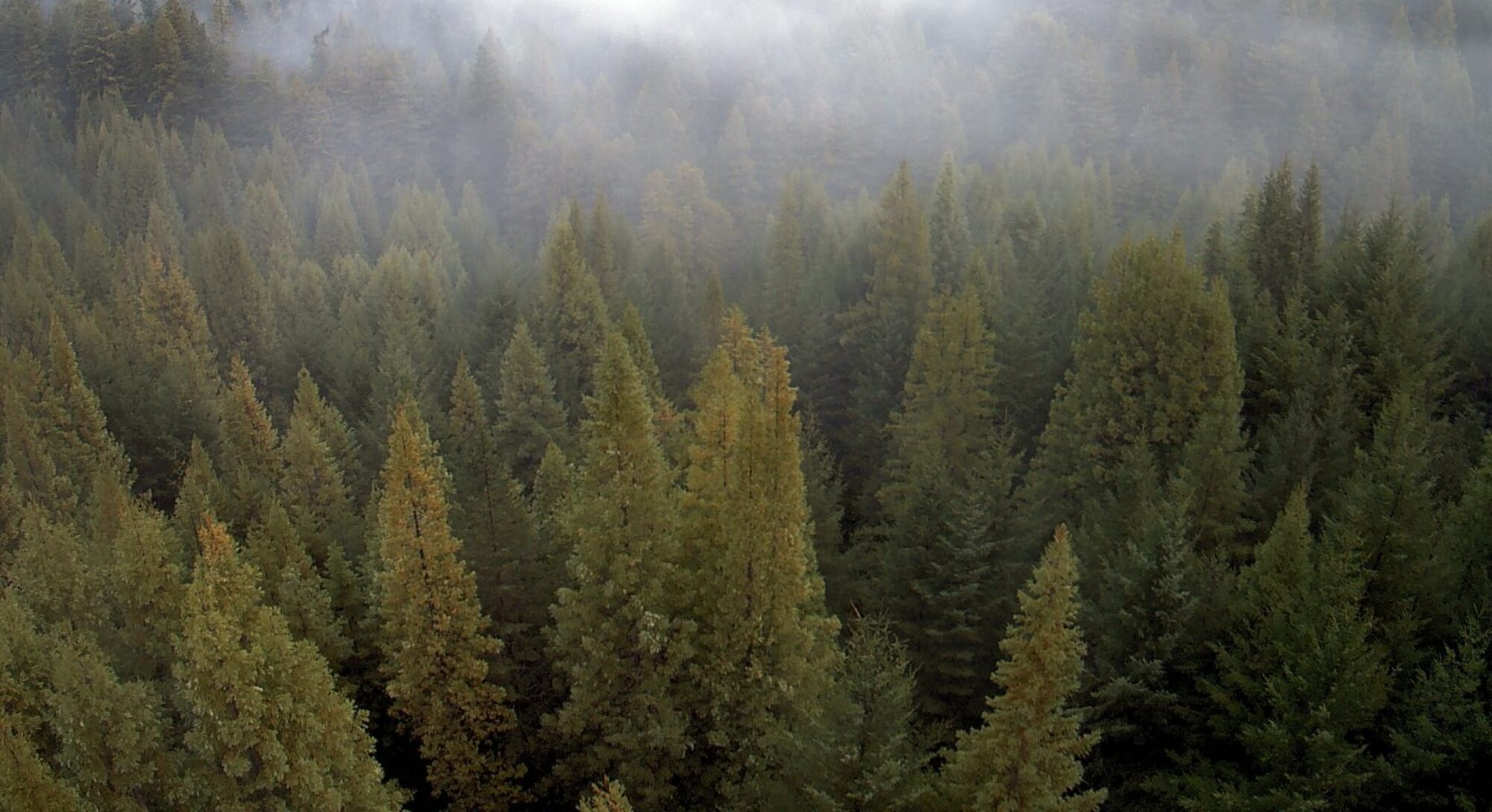
In the last week of the holiday break, Andrew and George Koch made a trip to visit their field sites in Northern California. Flying into Medford, OR, they then drove to Klamath, CA, where they visited Tree 51 in Redwood Experimental Forest. From there it was on to Save the Redwood League’s (SRL) Harold Richardson Preserve in coastal Sonoma County. After two days spent there (and two nights at Sea Ranch) they drove on to Big Basin Redwoods State Park, just north of Santa Cruz, before flying home out of San Jose.

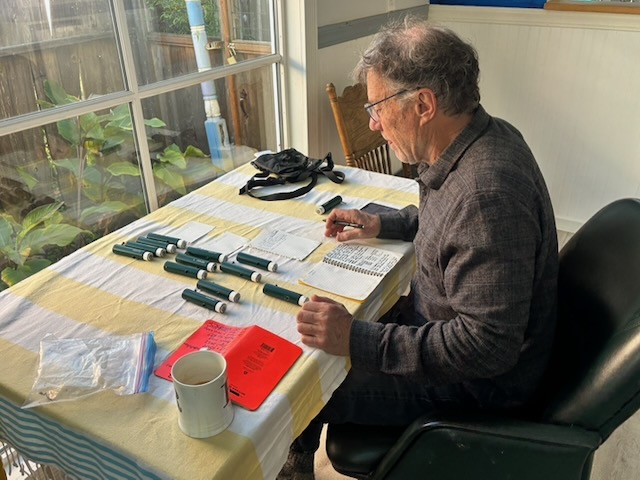
The purpose of the trip was to conduct site maintenance and download data from Tomst point dendrometers, which had been installed along a vertical profile on one tree at each site. At Harold Richardson, a solar panel had to be re-mounted and some old equipment removed; at Big Basin, a new phenocam had to be installed.

Despite a dismal forecast (a series of atmospheric rivers had drenched the region during the preceding 2 weeks), the hardy arbornauts remained relatively warm and dry the entire trip.

It was a pleasure to meet up with former postdoc Drew Peltier and his student Declan (at Harold Richardson and Big Basin), as well as UC Davis PhD student Lily Klinek and SRL Senior Scientist Laura Lalemand (at Harold Richardson).

The photos show Andrew somewhere in Tree 51, and George playing Tetris with a dozen dendrometers.

Lab members present at AGU

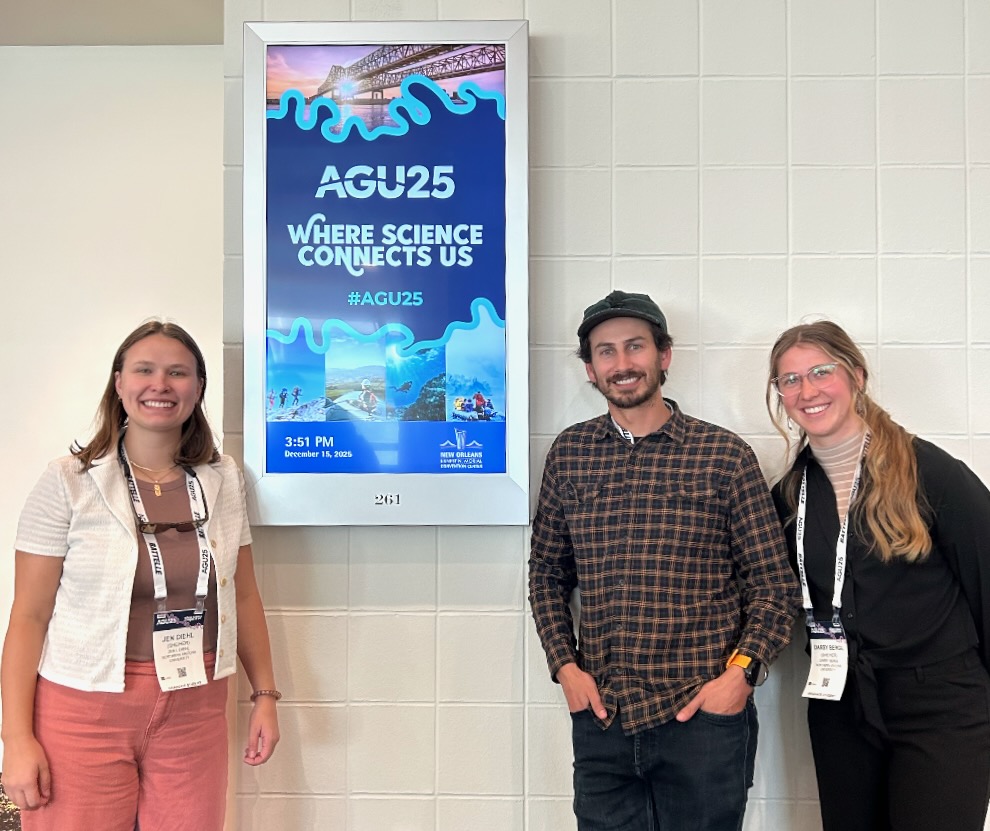
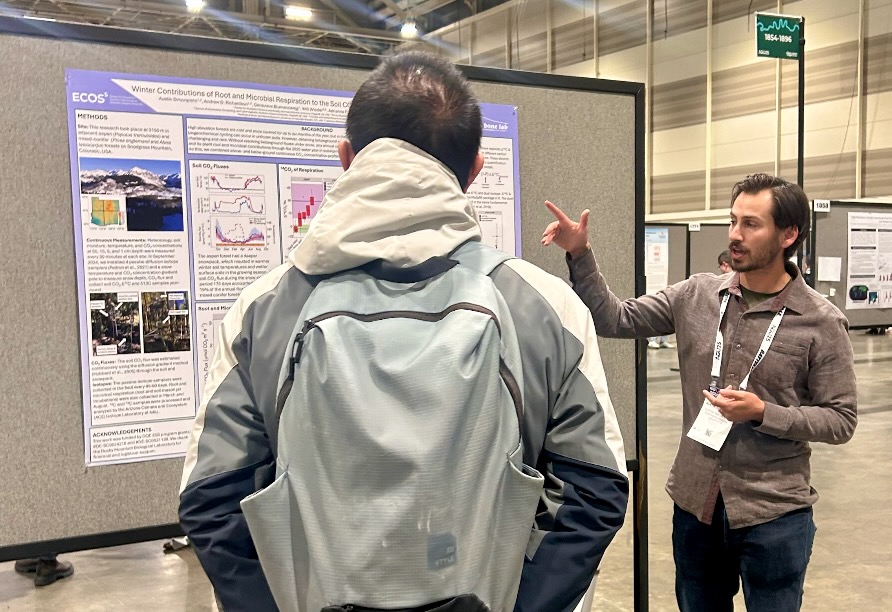
In December, lab members Austin, Jen, and Darby attended AGU 2025 in New Orleans, held under the theme “Where Science Connects Us.”

Highlights included a poster presentation by Austin titled “Winter Contributions of Root and Microbial Respiration to the Soil CO2 Flux in Mixed-Conifer and Aspen Forests,” a talk by Jen titled “Is Your Thermal Camera Telling the Truth? Assessing Measurement Accuracy for Ecosystem Science,” and a talk by Darby titled “Increasing Respiration Weakens the Carbon Sink over Two Decades in a Temperate Deciduous Forest.” 

The lab also contributed to two successful scientific sessions. Mostafa and Jen led the session “Advancing Environmental Monitoring Through Near-Surface Remote Sensing: Capabilities, Applications, and Future Directions,” while Darby served as a convener for the session “Quantifying Rates and Coupling of Biogeochemical Cycles in Terrestrial Ecosystems.”

See you at AGU next year! 

Yujie’s paper comparing AmeriFlux and NEON data now out!

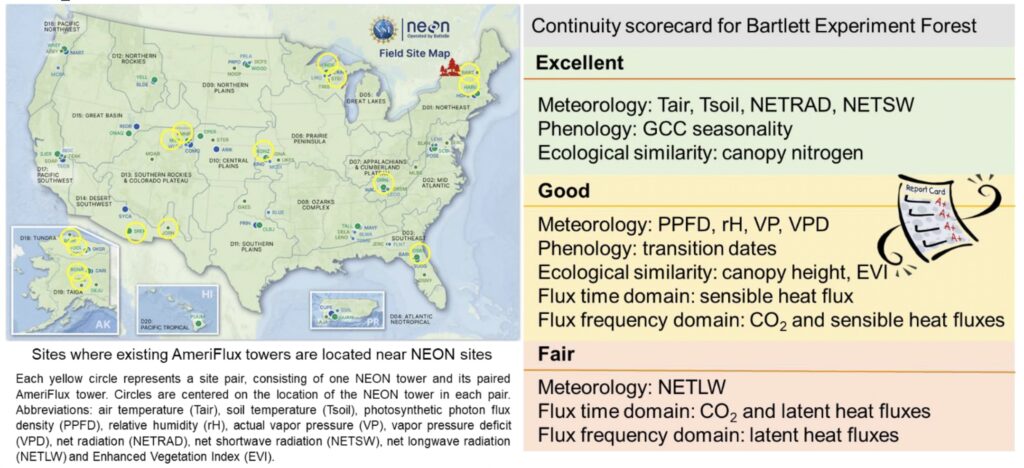
Yujie’s paper, “A tale of two towers: comparing NEON and AmeriFlux data streams at Bartlett Experimental Forest,” has just been published in Agricultural and Forest Meteorology. The two towers are separated by less than 100 m, but although meteorology and phenology data show good agreement between AmeriFlux and NEON, and although the agreement is reasonably between measured fluxes of carbon dioxide, latent heat, and sensible heat at the half hourly time scale, Yujie’s analysis shows that the carbon dioxide and latent heat fluxes are in poor agreement at the annual scale. For example, annual C balance differs by over 120 g C m-2 y-1 between the two towers, and patterns of inter annual variability are not at all in agreement. 

This paper raises important questions about the representativeness of any one tower in relation to the broader landscape it assumed to represent, and also suggests that we are probably (still) under-estimating uncertainty in annual C budgets derived from eddy covariance measurements, and sometimes we may be reading too much into the interannual variability we measure at individual sites. 

Great job by Yujie and collaborators, including Paul Stoy, Housen Chu, Dave Hollinger, Scott Ollinger, Andy Ouimette, Dave Durden, Cove Sturtevant, and Ben Lucas.