
Undergrad Camelia Mosor awarded grant to study redwoods

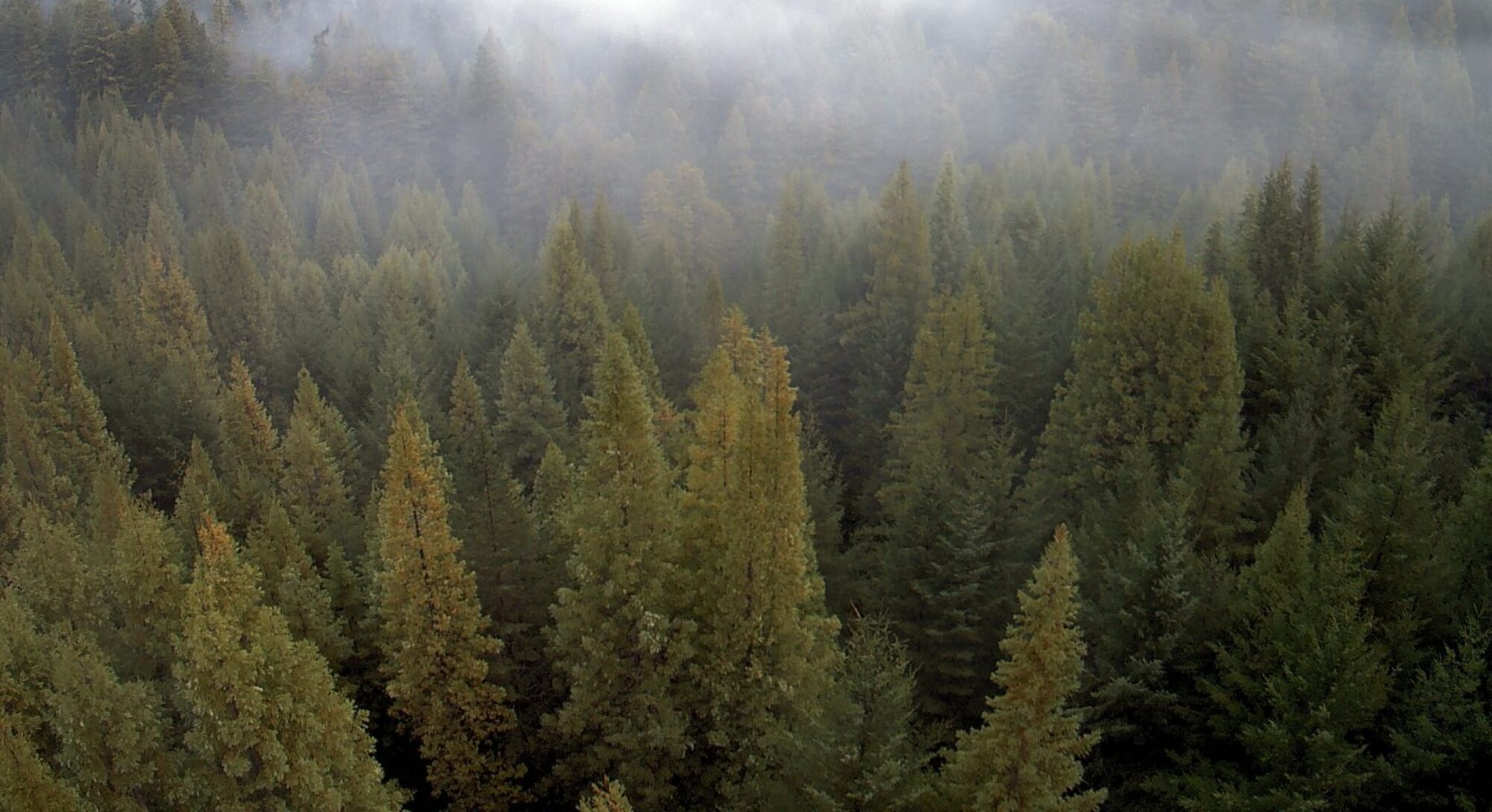
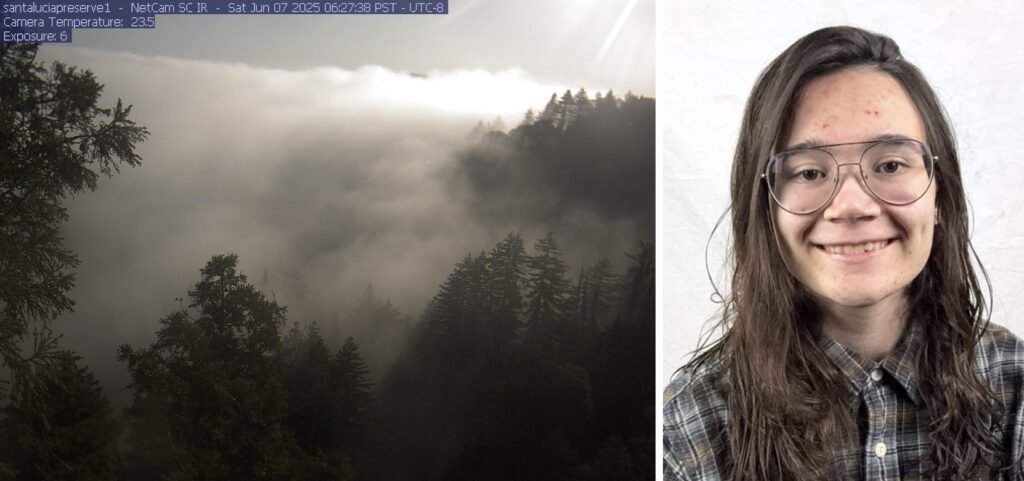
During the fall semester, Camelia Mosor, Computer Science major and undergraduate in the ESSTE program in Ecoss, learned about potential applications of AI-based tools to assist with analysis and interpretation of PhenoCam imagery. Her interest led to working with Jacob on annotation of images from his work at the Sevilleta Mean-Variance Experiment in New Mexico. Now Camelia has a project that is all her own—she was just awarded a $6500 grant from the Save-the-Redwoods League for her proposal, Automated Fog Detection in Coast Redwood Forests.  Mentored by George Koch and Andrew, Camelia’s project will develop and train a machine learning model to detect the presence of fog in phenocam  imagery at 4 research sites in George and Andrew’s Redwoods Observatory Network. She will then use the model to describe recent fog history and relate it to other sensor-based indicators of fog at sites in Monterey County, Santa Cruz County, Sonoma County, and Del Norte County.  

Congratulations, Camelia, on this fantastic achievement!
The fog comes
on little cat feet.

It sits looking
over harbor and city
on silent haunches
and then moves on.
— Carl Sandburg 
Tansley Review out in New Phytologist

Andrew is coauthor on a Tansley Review just published in New Phytologist, “Carbon uptake, storage, and allocation patterns contribute to blurring of annual 14C signals in tree rings.” Led by Amy Hessl, a paleoclimatologist at West Virginia University, the paper reviews how trees take up, store and use carbon and how these processes can affect the timing and strength of the radiocarbon “spikes” left behind in the atmosphere by past solar storms, known as Miyake events.  The paper emerged from a new NSF-funded collaboration between Hessl and Prof. Mariah Carbone.

Modeling led by Andrew and Mariah shows how tree biology has a fundamental impact on how faithfully the atmospheric signal is preserved. Andrew noted that “This study has a lot of implications for applications of carbon dating in fields such as archaeology, for example, as well as the use of radiocarbon in tree rings to reconstruct historical patterns of atmospheric radiocarbon.” 

Ecoss visual artist Victor Leshyk contributed a brilliant illustration that captures the underlying processes, reproduced below.

There is a write-up about the paper in the NAU Review.

Lily Klinek visits from UC Davis

After meeting up with Andrew and George Koch in Sonoma County earlier this month, Lily Klinek made a visit to NAU to talk more about redwoods and—and to learn more about the dendrometer measurements, supported by Save the Redwoods League, that Andrew and George have been making at sites from Del Norte county to Monterey County. Lily will be including these data in a range-wide synthesis of the timing and environmental sensitivity of redwood tree growth.

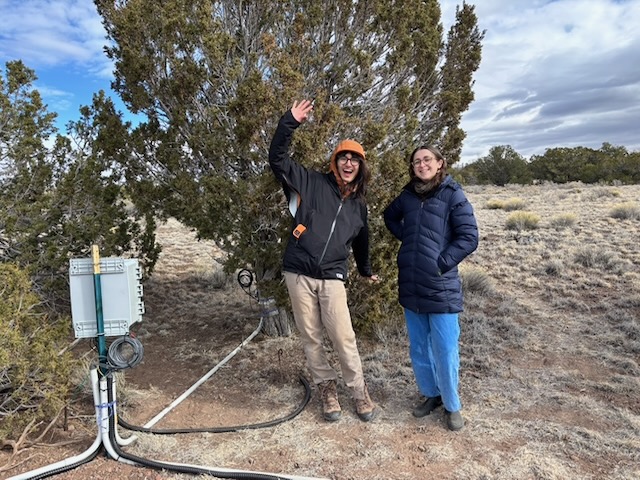
Lily had a chance to enjoy multiple social activities and get-togethers, including happy hour at Historic Brewing, a trip to Oscar’s “Blue Chute” pinyon-juniper field site (top photo), a hike into the cinder cone of Red Mountain, and a day trip to the Grand Canyon.