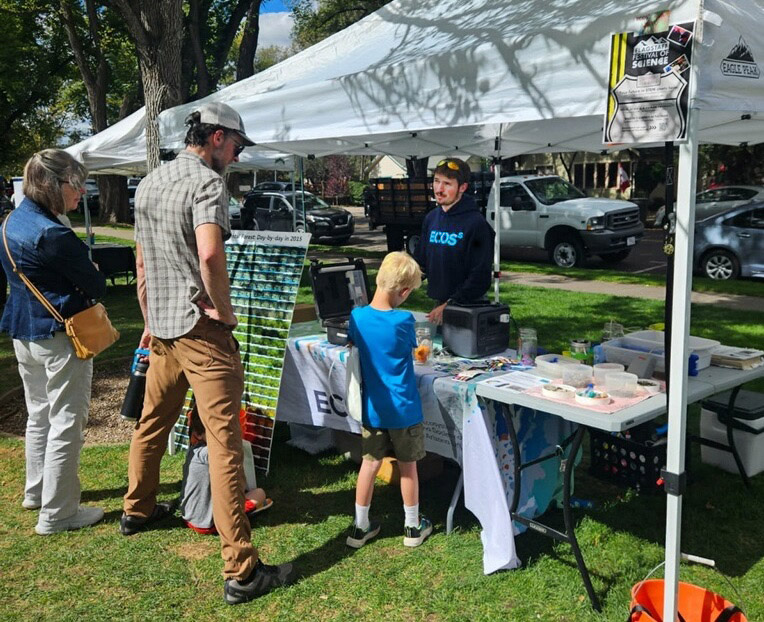
This past weekend, Jacob joined a couple of other grad students to host an ECOSS booth at the 2026 Science in the Park event as part of the annual Flagstaff Festival of Science. Right in the heart of Flagstaff, this event brings together science enthusiasts ranging from kindergarteners to university faculty and everyone in between to learn about and indulge in the diversity of awesome science being done in Flagstaff. ECOSS takes part to showcase the different ecosystem ecology research projects going on within the Center. This year, Jacob taught booth visitors about the importance of studying plant phenology via PhenoCam and soil respiration via Flux Puppy. The Bartlett Experimental Forest year-long day-by-day collage was a real attention-grabber among all age groups! Science in the Park is always a highlight outreach event for the lab.
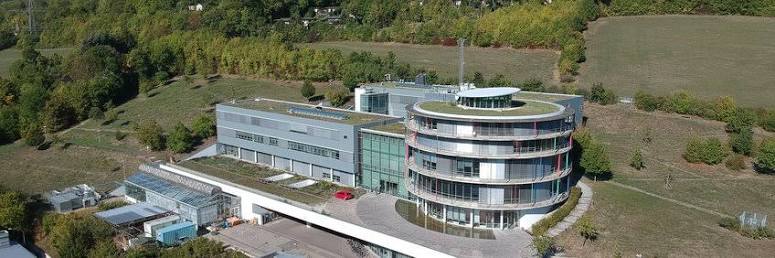
Andrew has been appointed to the Scientific Advisory Board for the Max Planck Institute for Biogeochemistry in Jena, Germany. The term of the appointment is six years. Andrew is looking forward to future visits to Jena to see old friends and sample local specialities including Thüringer Bratwurst, Schwarzbier, Klöße, Schweinshaxe, and Aromatique, not to mention the city’s fine döner kebab!
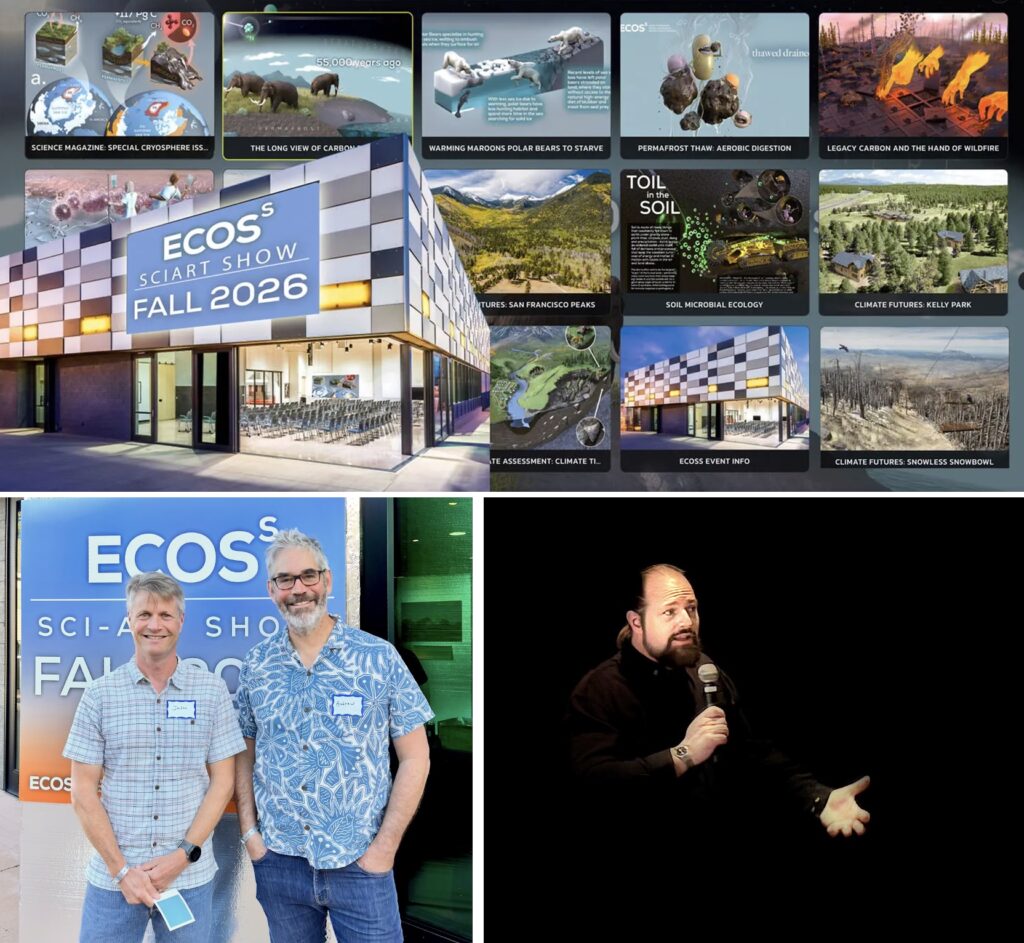
Andrew, Mariah, and Delaney participated in the Fall 2026 Ecoss Sci-Art Show, which was organized by the inimitable Victor Leshyk, the Ecoss Center Director of Science and Art, as part of the annual Flagstaff Festival of Science. Researchers from Ecoss had the opportunity to share their research with festival-goers, using choice examples of Victor’s artwork from the vast portfolio he has assembled over the last decade. The event was well-attended by NAU faculty, students, and administrators, as well as Flagstaff and Sedona residents both young and old.
Top: The flyer for the event, including some of Victor’s artwork; Bottom left: Vice President for Research Jason Wilder and Andrew; Bottom right: the inimitable Victor Leshyk.
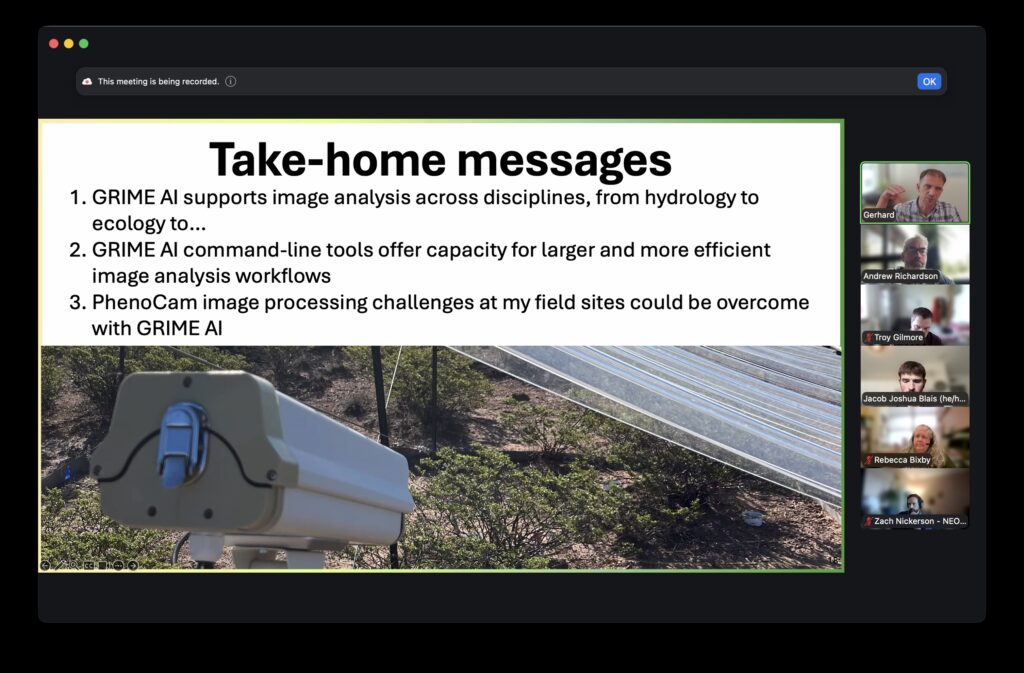
Jacob has been leveraging the parallel processing capacities and GPUs of NAU’s Monsoon HPC for his work on the impacts of changes in precipitation mean and variance on desert ecosystems. This work has involved training image segmentation models using the GRIME-AI platform and identifying dynamic changes in plant cover from tens of thousands of PhenoCam images from the Sevilleta LTER in New Mexico. In mid-September he made a Zoom presentation to the GRIME-AI Advisory Committee in which he gave a short update on how he is using GRIME AI in his work. As GRIME-AI was originally developed for hydrological applications, Jacob’s application of the tool to terrestrial ecosystem ecology was of particular interest to the Committee. Jacob deftly handled some tough questions, leaving the Committee genuinely impressed. Nicely done, Jacob!
In late June 2026, Cara and Perry (both natives of Philadelphia) attended PhysFest 5 at the University of Pennsylvania, the fifth installment of a hands-on plant physiology workshop designed to train roughly 40 grad students in key ecophysiology measurements. The workshop offered four full days of lectures and instruction on instruments related to plant water relations, thermal and hyperspectral imaging, environmental sensors, and gas exchange and fluorescence. In the final two days of the workshop, Cara and Perry teamed up with five other PhysFest attendees from Columbia, Oregon State, University of Florida, and University of Utah to craft a project idea that would be carried out in the nearby Woodlands Cemetery. Perry thought it could be interesting to use the instruments at PhysFest to assess how nighttime light pollution might affect leaf physiology. To test this, the group chose to put the Specim IQ Hyperspectral Camera and the LICOR LI-6800 gas exchange system to work in the cemetery. Given the ghostly slant to their sampling environment and the use of leaf spectral data, the group aptly named themselves the Woodlands Cemetery SPECtres. The group got to work looking for the right tree to sample, and found a beech tree with the characteristics they were looking for: one portion of the canopy directly next to a streetlight illuminated throughout the night, another portion away from the streetlight and shaded during the day, and another portion away from the streetlight but fully sunlit during the day. After collecting measurements on the three leaf types, the SPECtres found that the near-infrared (NIR) reflectance of both daytime-shaded leaves was about twice that of the sunlit leaf, but there was little difference in NIR reflectance between the daytime-shade/nighttime-lit and daytime-shade/nighttime-shade leaves. They then made photosynthetic light response curves for all leaves. As expected, the sun-adapted leaf had the highest saturation rate of CO2 assimilation. The daytime-shade/nighttime-lit leaf, however, had the lowest assimilation rate across light conditions, and the daytime-shade/nighttime-shade had intermediate assimilation, meaning exposure to nighttime artificial light could potentially decrease photosynthetic efficiency. Each of the six groups presented their projects at the end of the course to a panel of judges (the PhysFest instructors) in founding-father-esque powdered wigs. After a long week of learning, Perry and Cara led most of the cohort on a Philly tourist sightsee and bar crawl. They felt good being back in Philadelphia and were grateful to take new skills and friendships away from it.
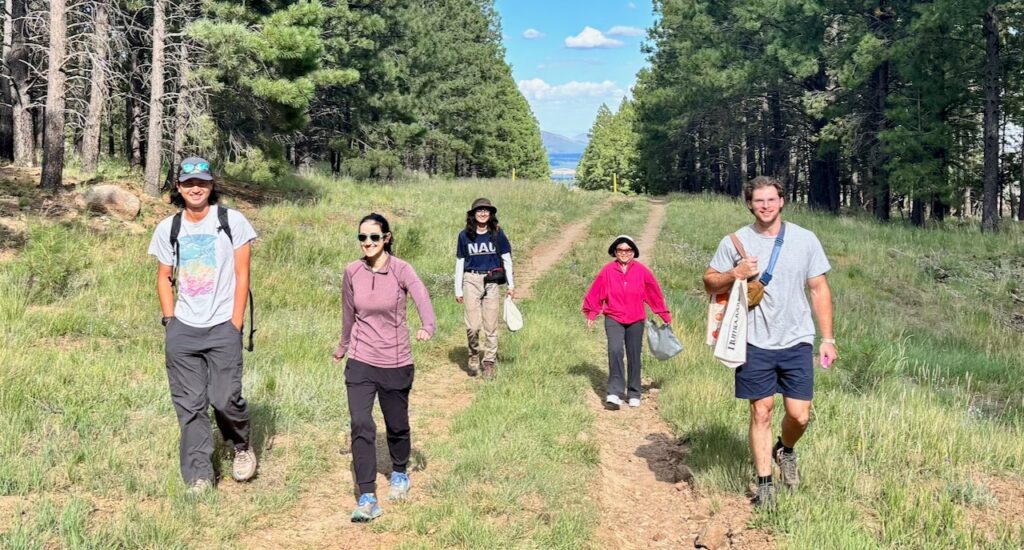
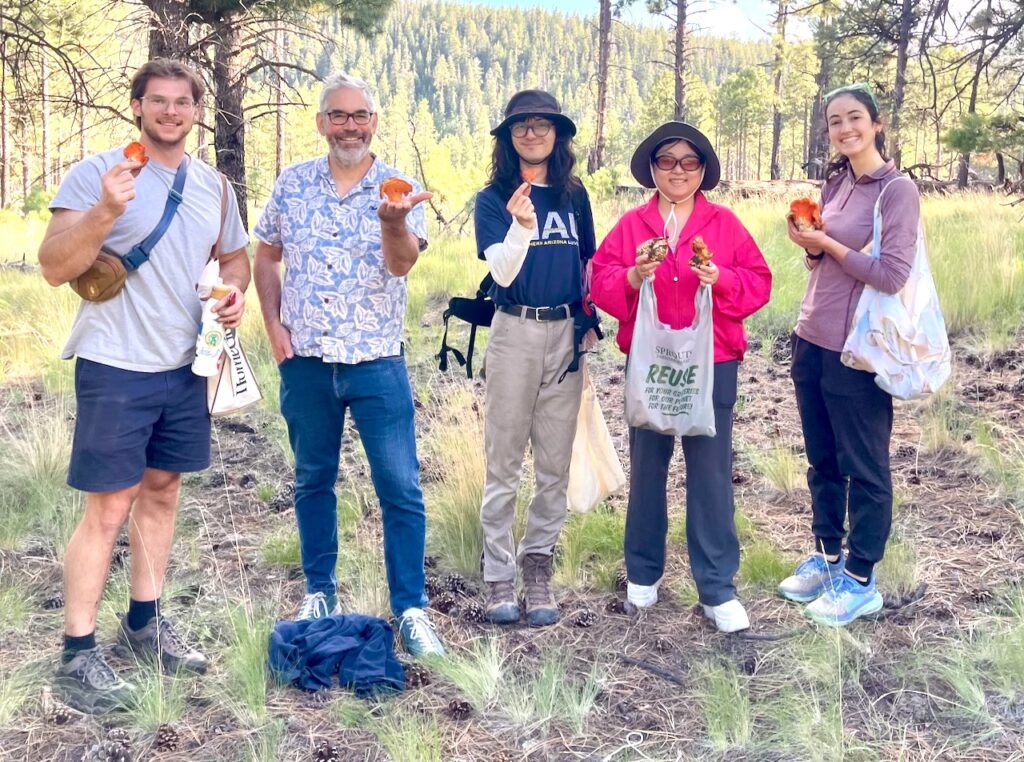
In early September, after a relatively wet two-week period, lab members Perry, Oscar, Yujie, and Cara (+1 for her friend Nicky, visiting from UC Davis) drove up to Schultz Pass to go foraging for lobster mushrooms. The lobster mushroom is fascinating in that it is not a single organism but rather a combination of a parasitic sac fungus (Hypomyces lactifluorum) and a host mushroom, usually a species of Russula or Lactarius. Good specimens are relatively tasty, with a firm texture and a flavor that is somewhat reminiscent of the Maine lobster, Homarus americanus. While it may not have been peak foraging season, the ‘shrooms were abundant and it was a great way to spend a beautiful Friday afternoon.
Top: The team, heading out in search of prize booty; lobster mushrooms, cooking in butter; the team, displaying their prize finds.
Two projects in which the Richardson Lab is involved have recently received some media attention, at NAU and nationally:
Darby’s paper, “Increasing Respiration Weakens the Carbon Sink Over Two Decades in a Temperate Deciduous Forest”, was highlighted in an NAU Review article titled “Nature’s most important climate change defenders are in peril“, and also received coverage in an article in the Concord (NH) Monitor titled “In New Hampshire, the lungs of the planet are coughing“. The paper, which documents a changing carbon cycle at Bartlett Experimental Forest since 2004, was profiled in a lab blog post a couple of weeks earlier.
It’s 698 miles (1123 km) from Carmel Valley, CA, to Flagstaff, and it’s a drive that Andrew and George Koch have done more than a few times for their redwoods projects; west of Carmel Valley in the Santa Lucia Preserve lie some fog-shrouded canyons where redwoods grow at the southern end of their range.
Highlights of the drive back to Flagstaff include the larger-than-life cutout figures near Salinas by local artist John Cerney , lunch at Taco Bros in Bakersfield, the Railroad Loop (not visible from the highway) at Tehachapi Pass, beautiful Barstow, the vast expanse of the Mojave Desert, the crossing of the Colorado River at Needles, CA—Topock, AZ, and the slow climb back up to the Colorado Plateau around Kingman .
On a recent trip back from Santa Lucia Preserve, topics of discussion included: (1) what is the impact of a large solar farm on net radiation and partitioning the surface energy balance? (2) how does a wind farm affect local climate? (3) how is heat from a data center dissipated, and could it be used for domestic heating? and, driving through Barstow, (4) how hot will it be at the low point on the drive, crossing the Colorado River at an elevation of 429 ft (129 m)?
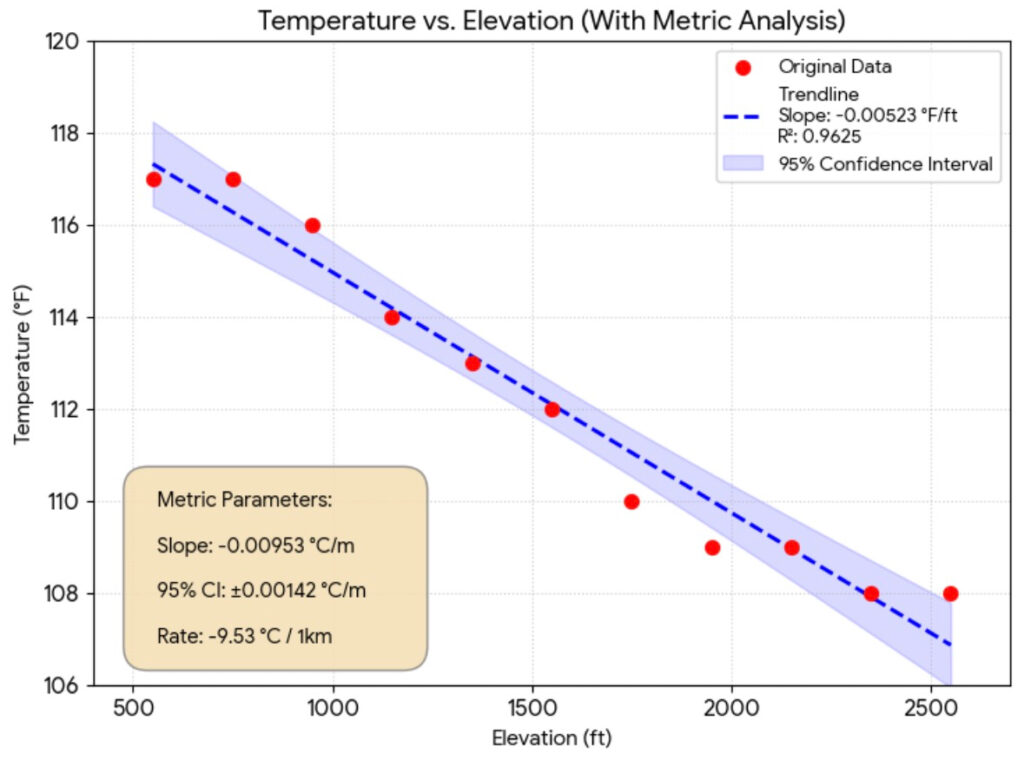
Question 4, in particular, led to some passenger-seat science! South of Mojave National Preserve, I-40 reaches a maximum elevation of about 3300 ft (1000 m) before dropping down to the Colorado. Using the ambient temperature sensor in George’s Ford Maverick (reporting integer values in °F) and the My Altitude app on Andrew’s iPhone, data on air temperature and elevation were recorded every 200 ft from just over 2500 ft down to about 500 ft, and then entered into Gemini for analysis and plotting.
The calculated lapse rate of 0.95 ± 0.14 °C per 100 m compares quite favorably with textbook values for the dry adiabatic lapse rate, typically accepted as 0.98 °C per 100 m elevation. The temperature crossing the Colorado? 117 °F, or 47 °C.
Bored on your next long drive? Think science!
AI-generated plot of elevation (ft above sea level) and temperature (°F) data recorded on the I-40 descent to the Colorado River. The analysis was speedily completed within minutes of crossing the River.
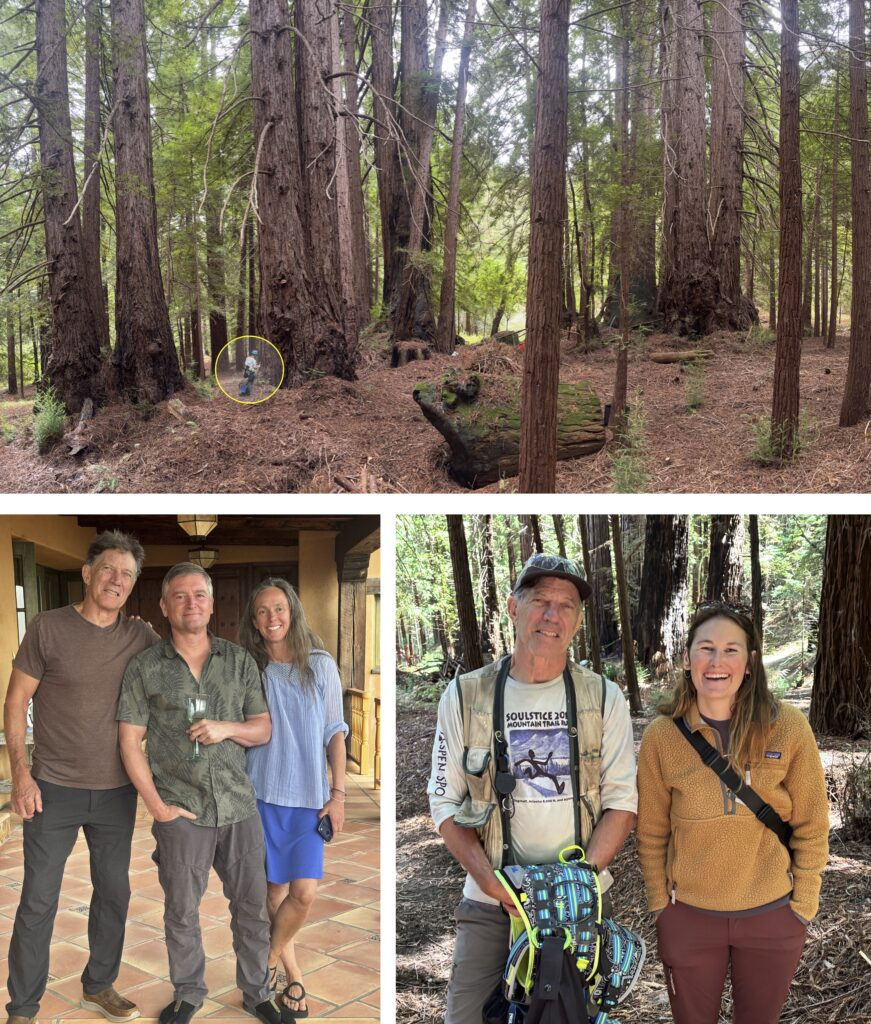
Andrew and newly-retired George Koch recently traveled to Carmel Valley, CA, to remove instrumentation from six redwoods in the upper reaches of Potrero Canyon, which lies within the Santa Lucia Preserve. Instruments to measure microclimate, fog, phenology, tree growth, and water stress had been installed two years ago with the objective of determining whether trees grow more on foggy nights than clear nights. The project has been funded by the Save the Redwoods League.
With more than 25 kg of equipment in each tree (including batteries, instruments and cables, fiberglass enclosures, and solar panels), and with trees averaging about 230 ft in height, assistance from both gravity and also Steve Sillett and Marie Antoine was greatly appreciated! Also: huge thanks to Tom and Alayna Gray, who hosted the arbornauts at their beautiful home within the Preserve, and a nod of appreciation to Emma Levy, conservation ecologist with the Santa Lucia Conservancy, who both helped to coordinate our visit and trekked out to the big trees to say hello.
Top: George at the base of a big tree; Bottom left: George, Steve, and Marie; Bottom right: George and Emma.
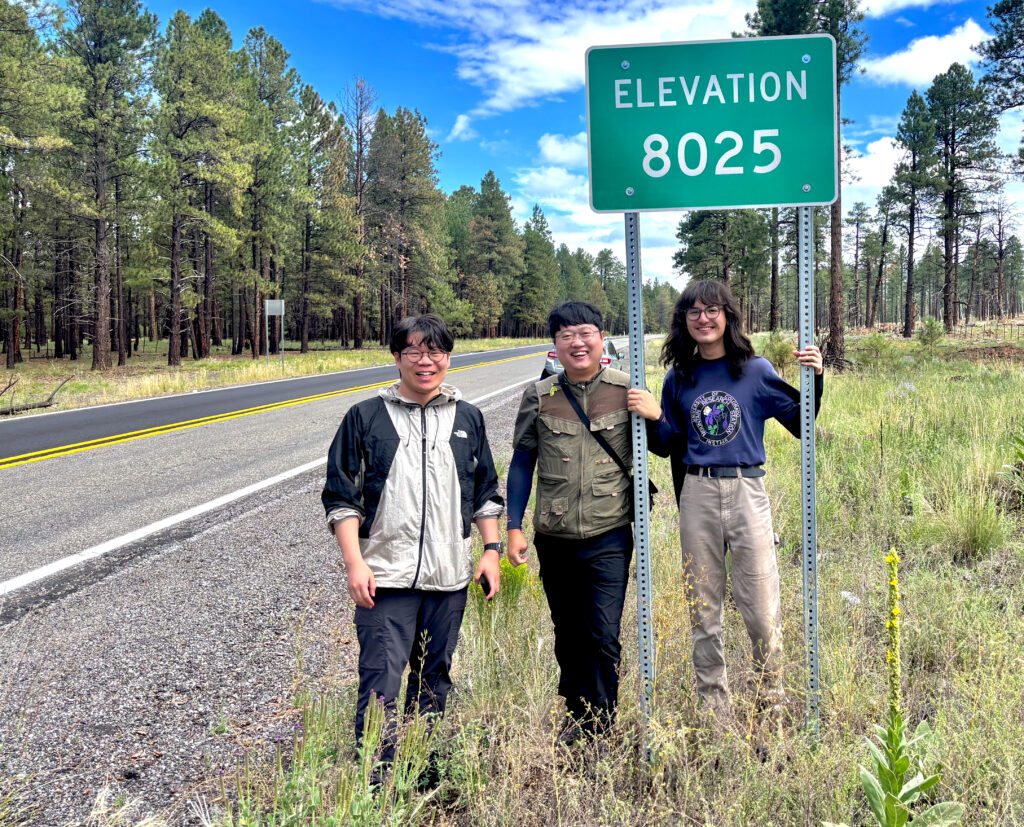
While on a tour of the American West that included visits to the National Ecological Observatory Network (NEON) in Boulder, CO, and the USA-National Phenology Network (USA-NPN) in Tucson, AZ, 김동학 (Kim Dong-hak) and 김상준 (Kim Sang-jun), from the Korea National Arboretum in Pocheon, Gyeonggi Province, South Korea, spent a day in Flagstaff to learn more about the PhenoCam Network. Dong-hak runs the Korean National Phenology Network, and is responsible for the K-NPN’s citizen science and phenological forecasting efforts.
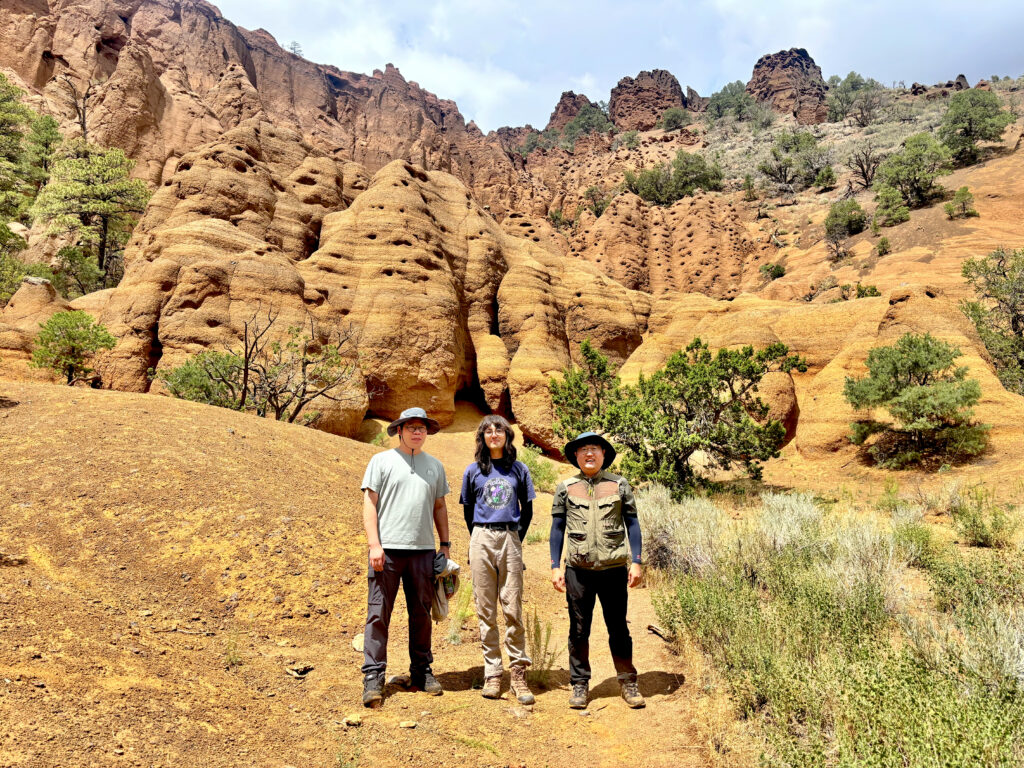
Dong-hak and Sang-jun joined Oscar and Andrew on an outing to Oscar’s “Blue Chute” field site, followed by a hike into the Red Mountain cinder cone and then lunch (one XL pepperoni, red onion, and green chile pizza, a new favorite) at the downtown Fratelli Pizza. After a quick tour of the Richardson-Carbone lab space, Dong-hak and Andrew talked about PhenoCam’s evolution and growth, open science philosophy, and cyberinfrastructure.
Thank you Dong-hak and Sang-jun for your visit—we hope that it leads to many productive collaborations down the road.
Dong-hak and Sang-jun were pleased to learn that in the US, elevation is measured in feet not meters!
Inside the Red Mountain cinder cone—one of the best short hikes in the Flagstaff area.