Visit from METER Group

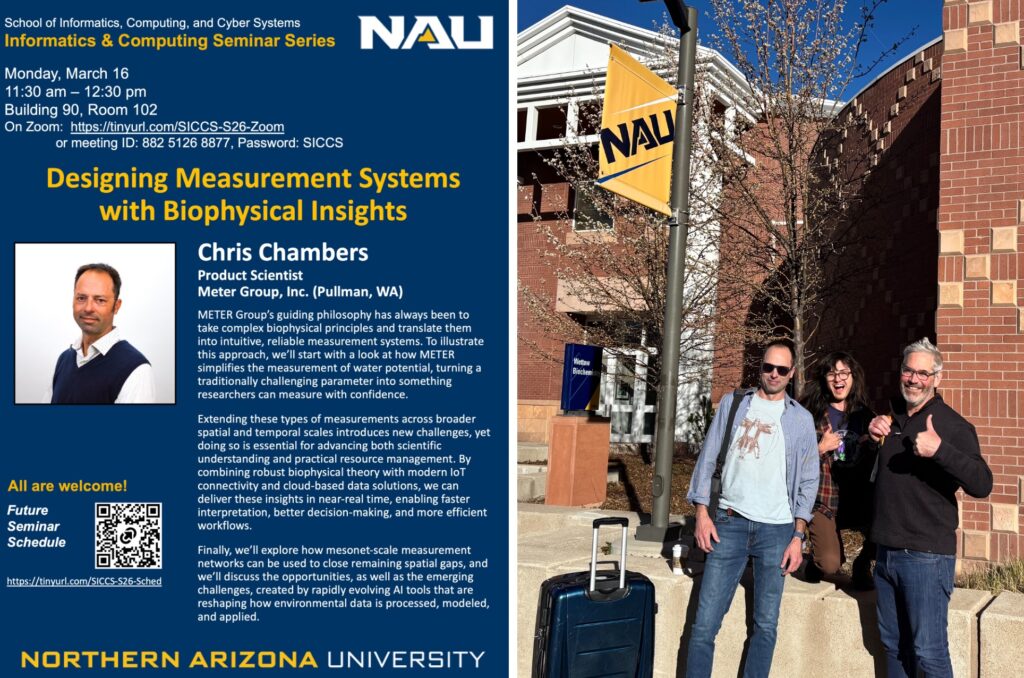
For quite a few years, the lab has been using METER Group’s all-in-one meteorological sensor, which measures air temperature, relative humidity, solar radiation, precipitation, wind speed and direction, barometric pressure, lightning strike frequency and distance, and sensor tilt. We’ve had many of these instruments installed at sites in Arizona, Colorado, and New Mexico, for both long-term installations and short-term measurement campaigns.

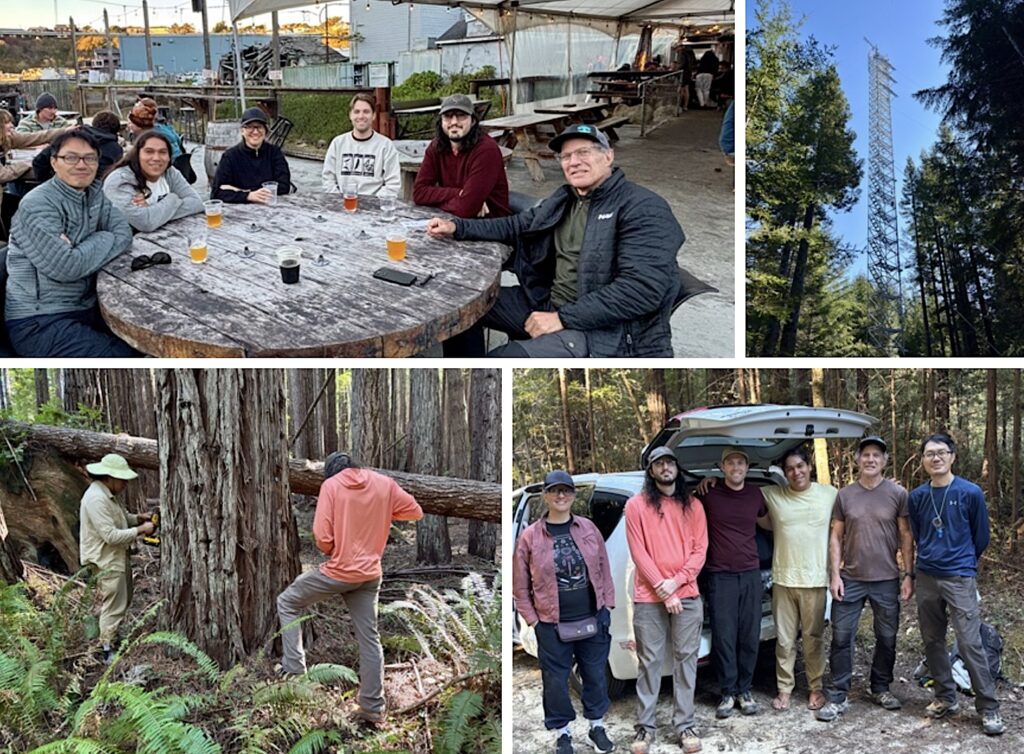
In mid-March, we had a visit from Chris Chambers and Carol McFarland from METER Group (formerly Decagon Devices). Chris gave a talk in the SICCS Informatics and Computing Weekly Seminar on “Designing measurement systems with biophysical insights”, and then after lunch at Martanne’s Burrito Palace, Chris and Carol held an “Office Hours” session where they were able to show off some of their new products to the NAU community. We then took a break for a well-attended happy hour “science session” at Mother Road.

After the visit, Carol noted that “it was lovely to learn more about your work, connect with some of your colleagues, enjoy some Flagstaff highlights, and meet your fantastic group of graduate students!”

Thanks to you both, Carol and Chris, for a fun and informative visit!
Dendrometer party in the redwoods

Andrew and George Koch traveled to Mendocino County, California, to meet up with colleagues from Lawrence Berkeley National Laboratory and UC Davis at the new redwood flux towers at Jackson Demonstration State Forest near Fort Bragg. With help from Housen Chu (LBNL) and Kosana Suvocarev (UC Davis), and their talented field crew, Andrew and George managed to get 61 automated point dendrometers and 11 soil moisture sensors installed within the footprints of the Parlin and Mitchell towers. Former Richardson Lab visitor Deklan Mengering is now part of the UC Davis team, and UC Davis PhD student Lily Klinek (who visited NAU in January) also showed up to lend a helping hand.

A special bonus was the visit by Dr. Aaron Teets (NAU PhD 2022), who dropped by at the end of the trip for a seafood dinner with Andrew and George.

Thanks to everyone who helped make this a remarkably successful outing!

Pixels to Eniro Patterns 2026 Workshop

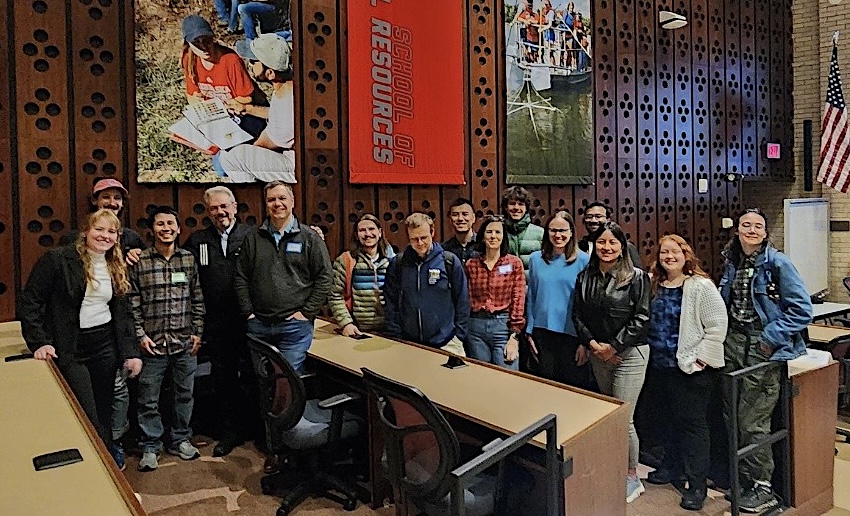
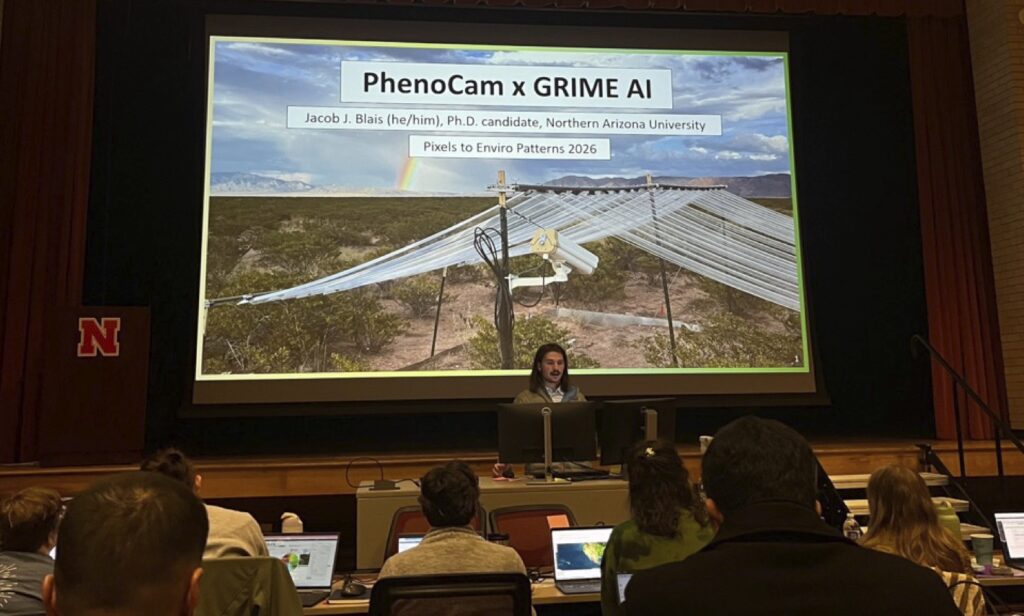
Over spring break, Jacob, Camelia (undergraduate in Computer Science), and Mike (PhenoCam Team / Advanced Research Computing) traveled to Lincoln, Nebraska for Pixels to Enviro Patterns (PEP) 2026. Hosted at the University of Nebraska-Lincoln, PEP 2026 was an NSF-funded science and storytelling workshop based around the powerful and continuously-evolving software called GRIME AI. Jacob, Camelia, Mike, and others have been working together on a project that leverages GRIME AI to use dynamic, instead of static, vegetation masks to derive phenological information from PhenoCam imagery of Jacob’s field sites in New Mexico.  Development of GRIME AI is funded by an NSF Geoinformatics grant awarded to Dr. Troy Gilmore at the University of Nebraska-Lincoln. Andrew is a co-PI on the grant. 

The workshop consisted of presentations about using time-lapse imagery and artificial intelligence technology for hydrological and ecological teaching and research. After returning to Flagstaff, Jacob noted that “seeing old friends and making new ones, and learning about cutting-edge science, really made the trip a treat!”