
Final fieldwork before the start of classes

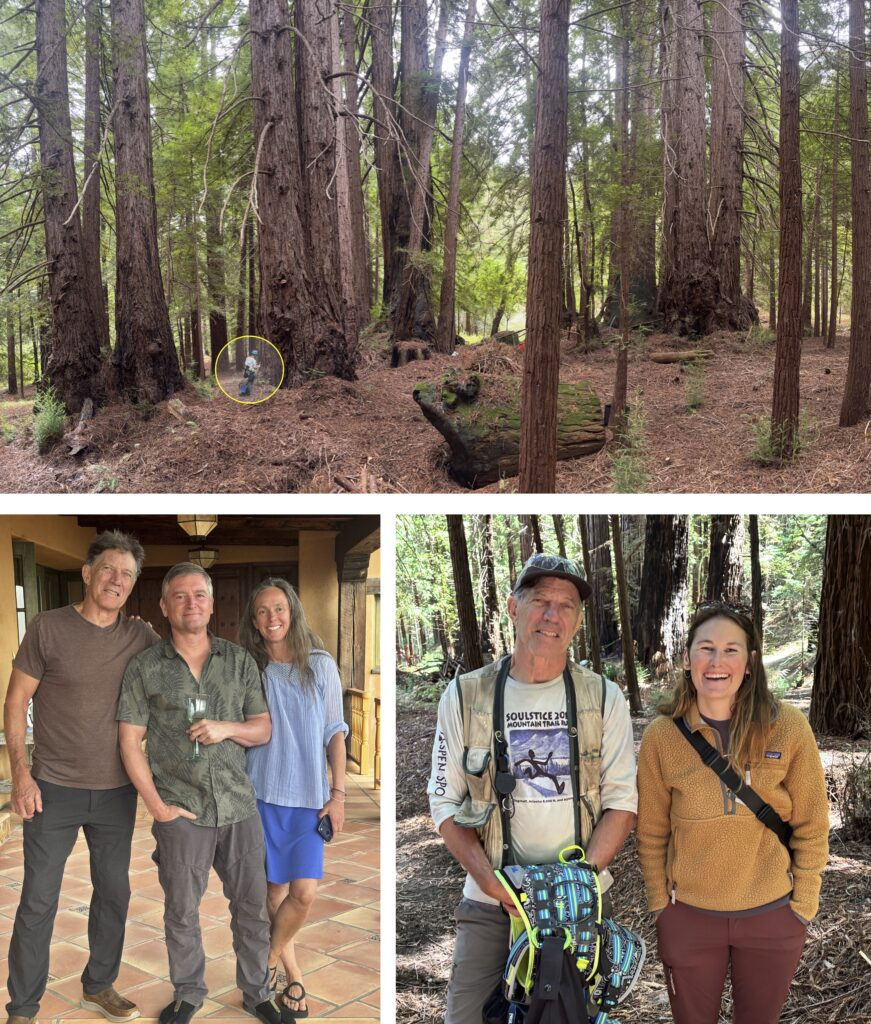
Andrew and newly-retired George Koch recently traveled to Carmel Valley, CA, to remove instrumentation from six redwoods in the upper reaches of Potrero Canyon, which lies within the Santa Lucia Preserve. Instruments to measure microclimate, fog, phenology, tree growth, and water stress had been installed two years ago with the objective of determining whether trees grow more on foggy nights than clear nights. The project has been funded by the Save the Redwoods League.

With more than 25 kg of equipment in each tree (including batteries, instruments and cables, fiberglass enclosures, and solar panels), and with trees averaging about 230 ft in height, assistance from both gravity and also Steve Sillett and Marie Antoine was greatly appreciated! Also: huge thanks to Tom and Alayna Gray, who hosted the arbornauts at their beautiful home within the Preserve, and a nod of appreciation to Emma Levy, conservation ecologist with the Santa Lucia Conservancy, who both helped to coordinate our visit and trekked out to the big trees to say hello.

Top: George at the base of a big tree; Bottom left: George, Steve, and Marie; Bottom right: George and Emma.

Korean phenology team visits NAU

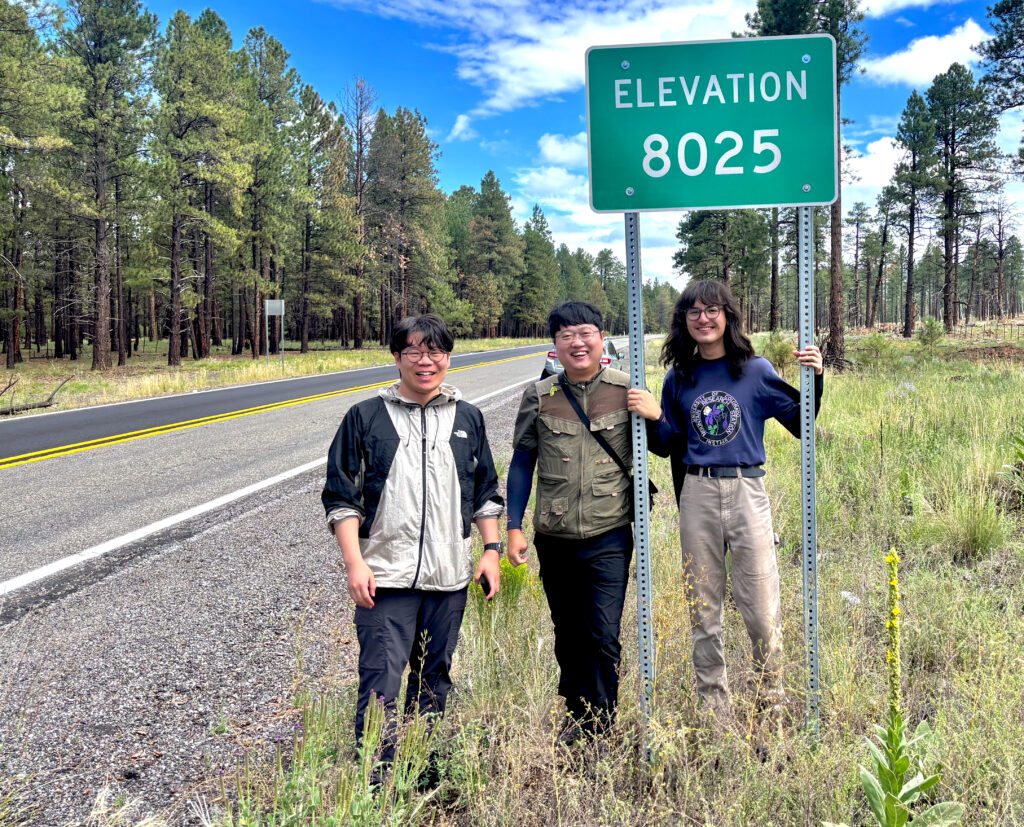
While on a tour of the American West that included visits to the National Ecological Observatory Network (NEON) in Boulder, CO, and the USA-National Phenology Network (USA-NPN) in Tucson, AZ, 김동학 (Kim Dong-hak) and 김상준 (Kim Sang-jun), from the Korea National Arboretum  in Pocheon, Gyeonggi Province, South Korea, spent a day in Flagstaff to learn more about the PhenoCam Network. Dong-hak runs the Korean National Phenology Network, and is responsible for the K-NPN’s citizen science and phenological forecasting efforts.

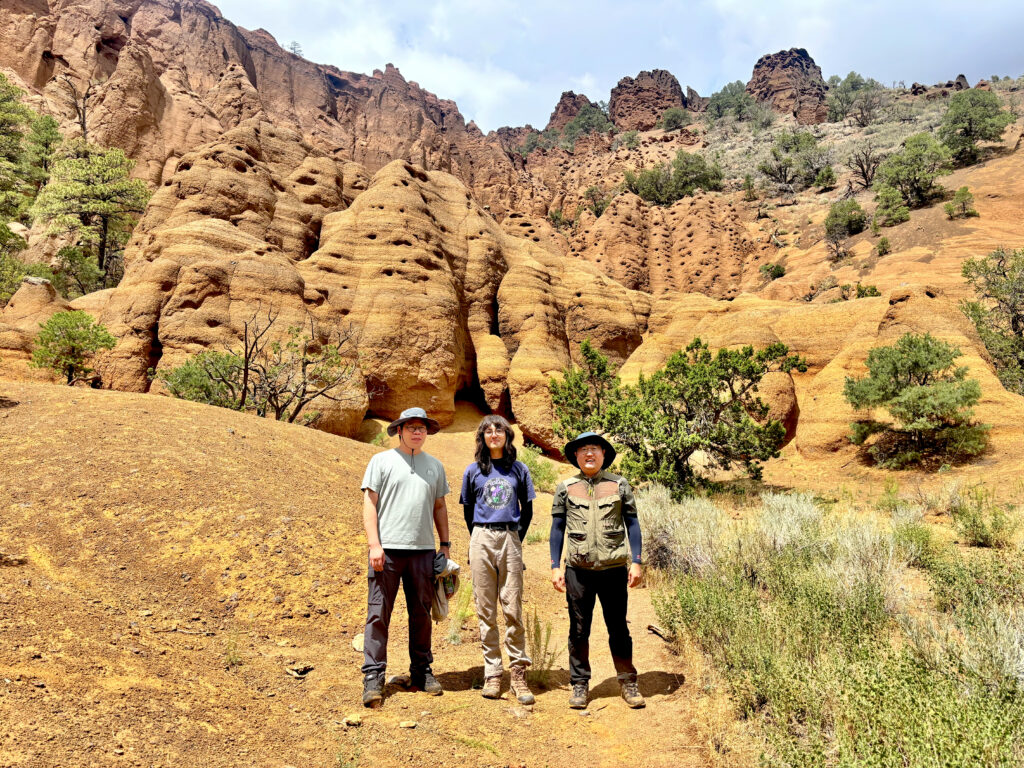
Dong-hak and Sang-jun joined Oscar and Andrew on an outing to Oscar’s “Blue Chute” field site, followed by a hike into the Red Mountain cinder cone and then lunch (one XL pepperoni, red onion, and green chile pizza, a new favorite) at the downtown Fratelli Pizza. After a quick tour of the Richardson-Carbone lab space, Dong-hak and Andrew talked about PhenoCam’s evolution and growth, open science philosophy, and cyberinfrastructure.

Thank you Dong-hak and Sang-jun for your visit—we hope that it leads to many productive collaborations down the road.

Dong-hak and Sang-jun were pleased to learn that in the US, elevation is measured in feet not meters!

Inside the Red Mountain cinder cone—one of the best short hikes in the Flagstaff area.

20 y of Bartlett paper published in GCB-Communications

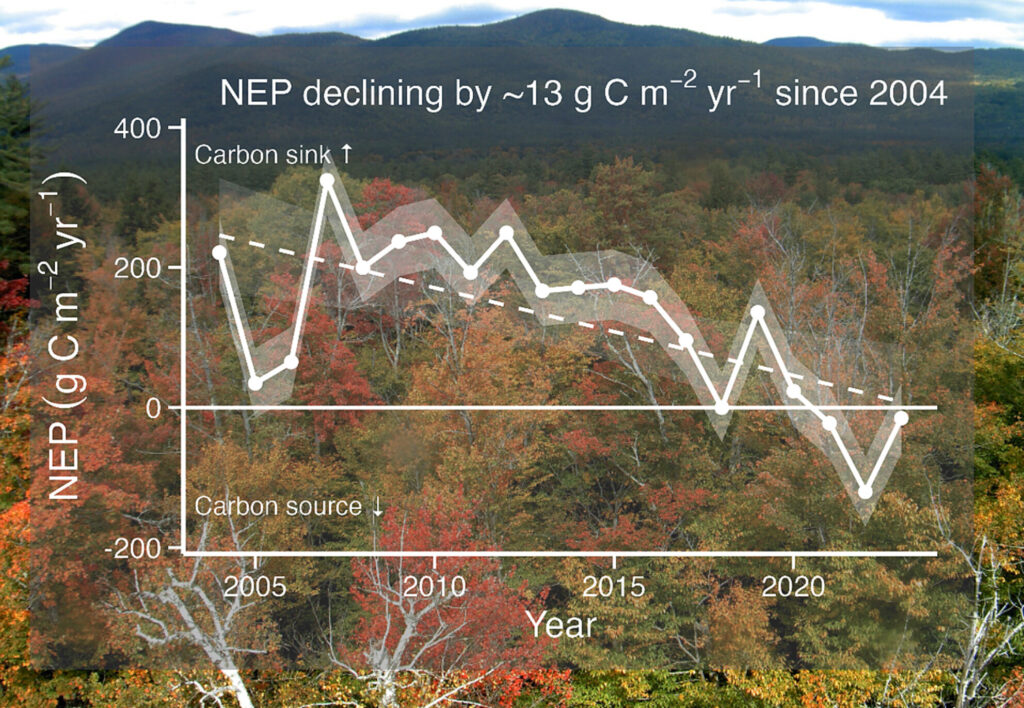
Big congratulations to Darby—her first dissertation chapter has just been published in Global Change Biology Communications! The paper, “Increasing Respiration Weakens the Carbon Sink Over Two Decades in a Temperate Deciduous Forest,” synthesizes 20 y of flux measurements from Bartlett Experimental Forest, New Hampshire. The key result is that net ecosystem productivity (NEP) is showing a strong declining trend over the period 2004-2023. For the last three years, Bartlett has been a net source of CO2 to the atmosphere. Darby’s analysis shows that this shift in NEP is related to warmer winters and increasing ecosystem respiration. Her paper is one of just a handful published to date with 20 y of flux measurements.

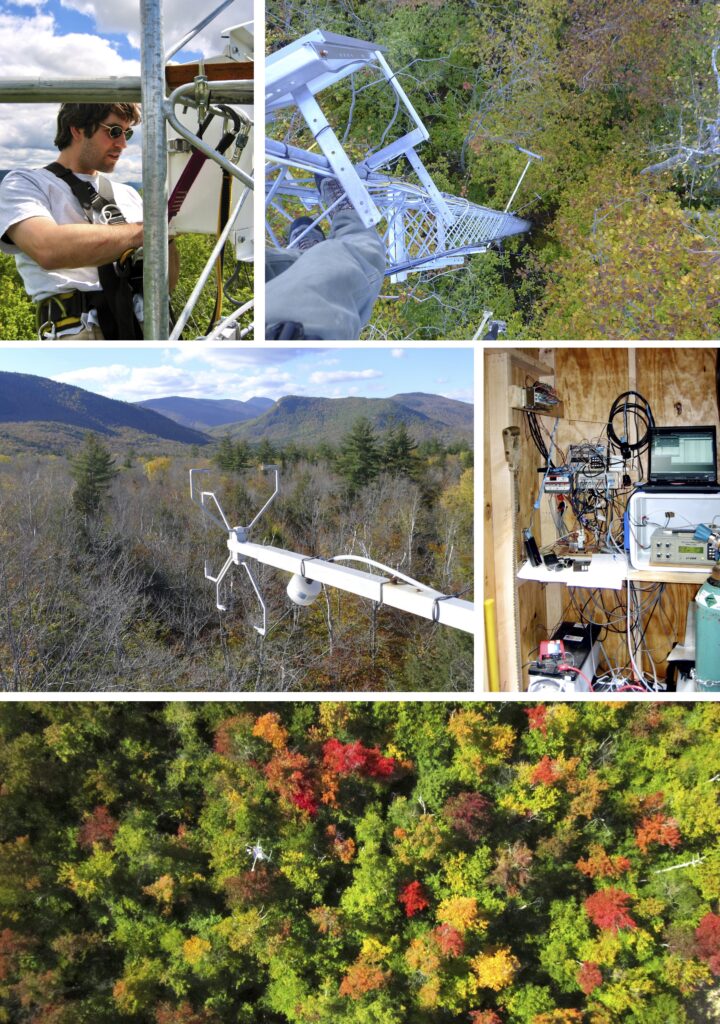
Andrew, his postdoc advisor Dave Hollinger (USDA Forest Service, retired), and Dave’s technician Bob Evans (USDA Forest Service, retired) built the tower late in 2003 and instrumented it for eddy covariance measurements in January 2024 (Darby was in first grade at the time). The AmeriFlux site been running (most of the time!) ever since, thanks to assistance from many different people over the years including Scott Ollinger, Andy Ouimette, Chris Costello, Trevor Keenan, and Don Aubrecht.

The pictures below document some of the first 10 y at Bartlett. Top row: a much younger Andrew working on the tower (2004), looking down from the top of the tower (2012), looking west from the top of the tower to Crawford Notch (2012), the instrument shed at the base of the tower (2004), and early UAV imagery (2014) from Andrew’s former PhD student Steve Klosterman (the tower is clearly visible left of center).

Pizza lunch for Mostafa

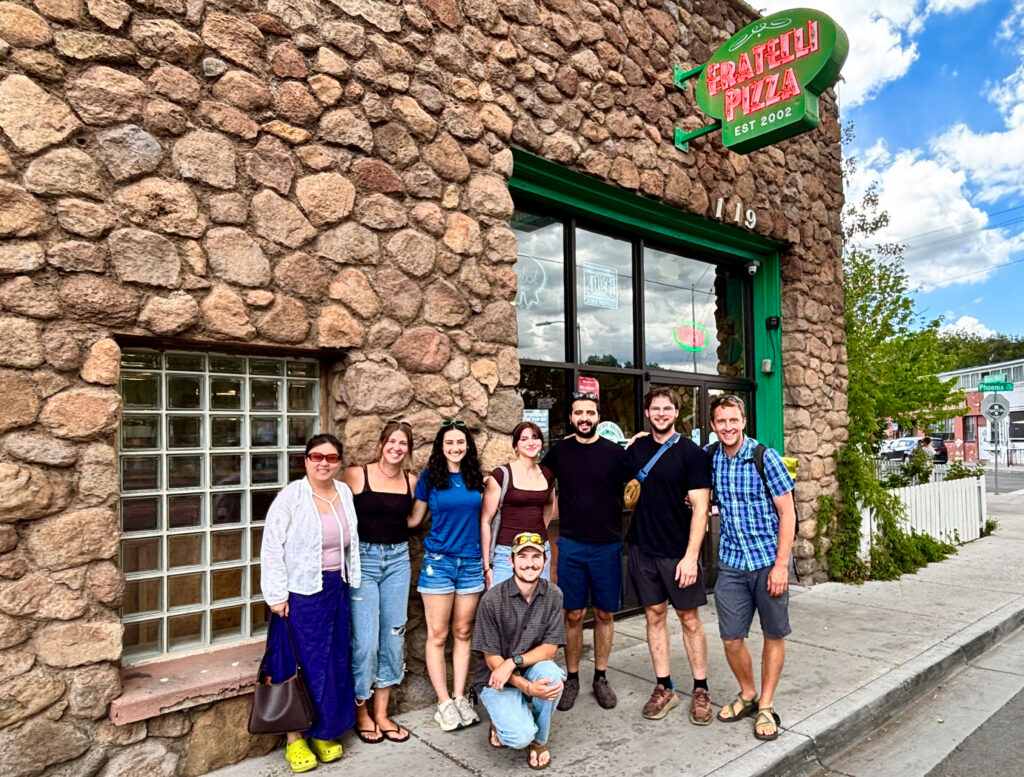
Postdoc Mostafa Javadian is now Professor Dr. Javadian: he is starting a tenure-track position at College of the Holy Cross in Worcester, Massachusetts. To celebrate, lab members went out to lunch at Fratelli Pizza.

Holy Cross is just 20 minutes from Harvard Forest, and Mostafa expects to conduct research there. His teaching will be in the areas of general environmental science and remote sensing.

Mostafa had been with the lab since 2023, and his warmth, kindness, and good humor will be missed. Mostafa published a number of important papers during his time in Flagstaff. In one study, he applied the PT-JPL model to estimate individual tree transpiration from thermal images. In another, he carefully documented the performance of the NetCam Live2 as a suitable camera for PhenoCam use. He also contributed to the curation and publication of the PhenoCam V3 dataset, and put together another paper (not yet published) on changes in land surface temperature.

Good luck with your new position, Mostafa!

From left: Yujie Liu, Darby Bergl, Cara Fields, Jacob Blais, Delaney Watkins, Mostafa, Perry Giambuzzi, and Ben Wiebe.

Oscar presents at ESA 2026

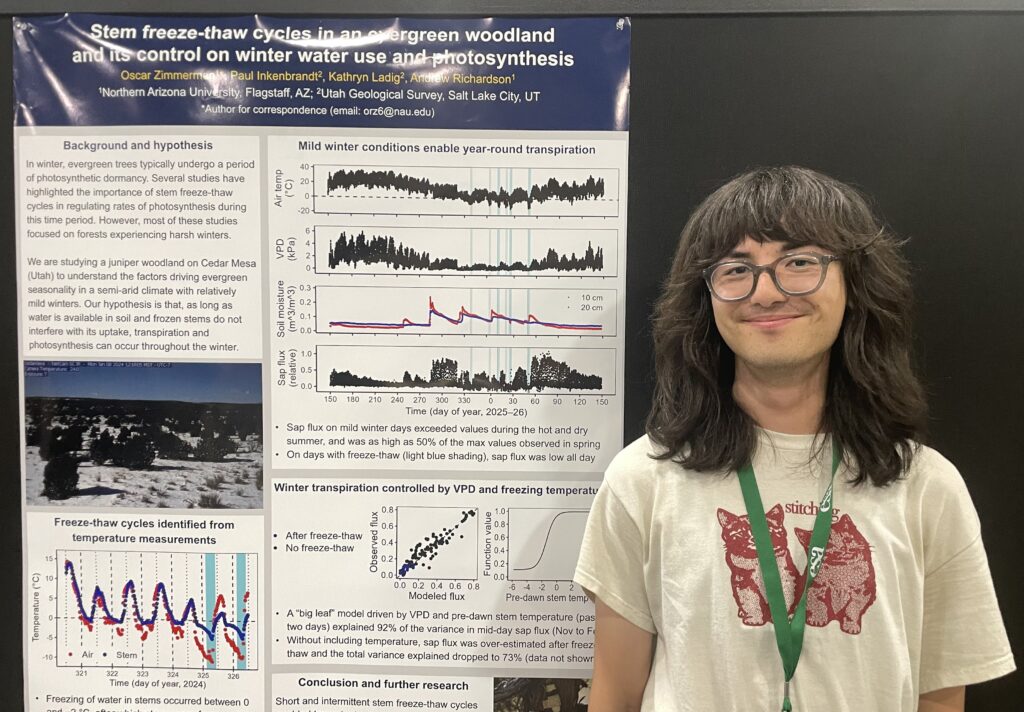
Oscar drove up to Salt Lake City to participate in the 111th annual meeting of the Ecological Society of America. He presented two posters, “Stem freeze-thaw cycles in an evergreen woodland and its control on winter water use and photosynthesis” and “Using open-access PhenoCamimagery and data for science outreach and education in elementary to university-level classrooms.” Visitors to his posters included friends and collaborators Drew Peltier and his group from UNLV, Barry Logan from Bowdoin, Marguerite Mauritz from UTEP, and Lin Meng from Vanderbilt. After the meeting, Oscar commented that “I felt more ‘at home’ than I thought I would, due to the large number of ecophys sessions.”

Next year’s ESA meeting is in Andrew’s hometown of Toronto, Canada!

End of semester lab lunch

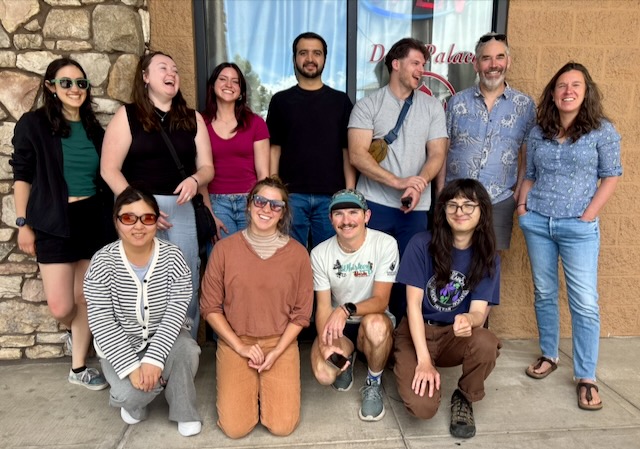
To celebrate the end of the semester, Andrew and Mariah took the lab group out to lunch at Delhi Palace. You can’t go wrong with garlic naan and a big plate of rice and curry!

Another great semester for the SICCS Seminar

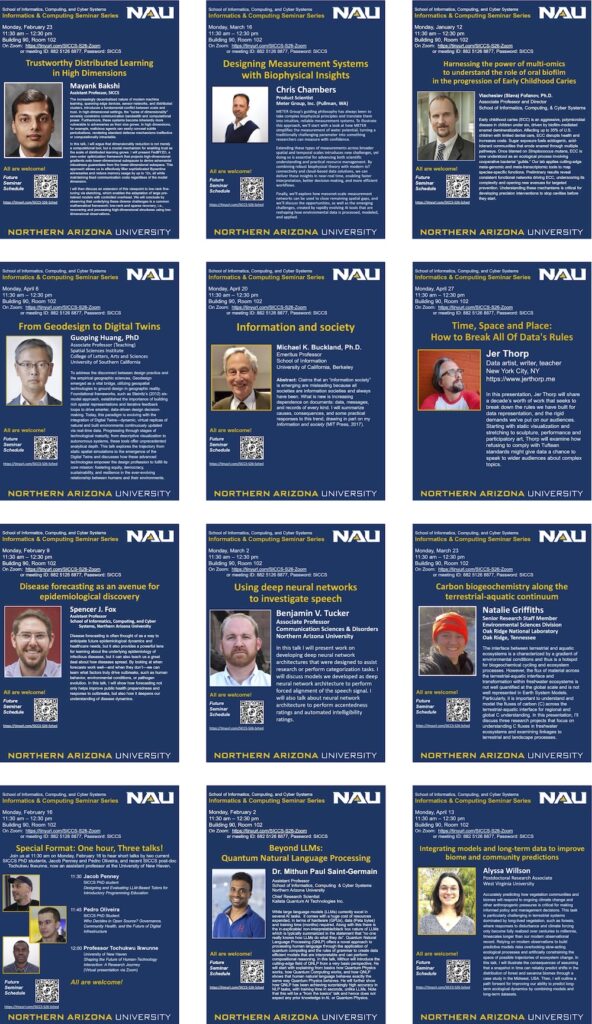
On April 27, we wrapped up the last SICCS Informatics & Computing Seminar of the spring semester with another great talk — data artist Jer Thorp talking about his amazing work over the last decade, from public installations to compelling visualizations. Along the way we heard about a wide range of computing and interdisciplinary topics, including machine learning (e.g., trustworthy distributed learning, deep neural networks, natural language processing) and data science applications. Speakers highlighted applications of computing in science and society, such as epidemiology, bioinformatics, geospatial systems, environmental science, and microbiome research. In addition, the series explored broader themes like information theory, data visualization, human-centered computing, and the societal impact of technology.

Thanks to SICCS Director Fofanov and SCE Dean Chadwell for supporting our visiting speakers this semester.

See you in the fall!

Darby visits MPI Jena

In May, Darby flew to Germany to spend two weeks at the Max Planck Institute for Biogeochemistry in Jena. She was hosted by Carlos Sierra and MPI Director Sue Trumbore. Working 1-on-1 with Carlos enabled Darby to make some great progress on modeling her soil 14C data from Hubbard Brook using the SoilR package. Darby gave a presentation on her work while she was there, and also met many of the other scientists working at MPI.

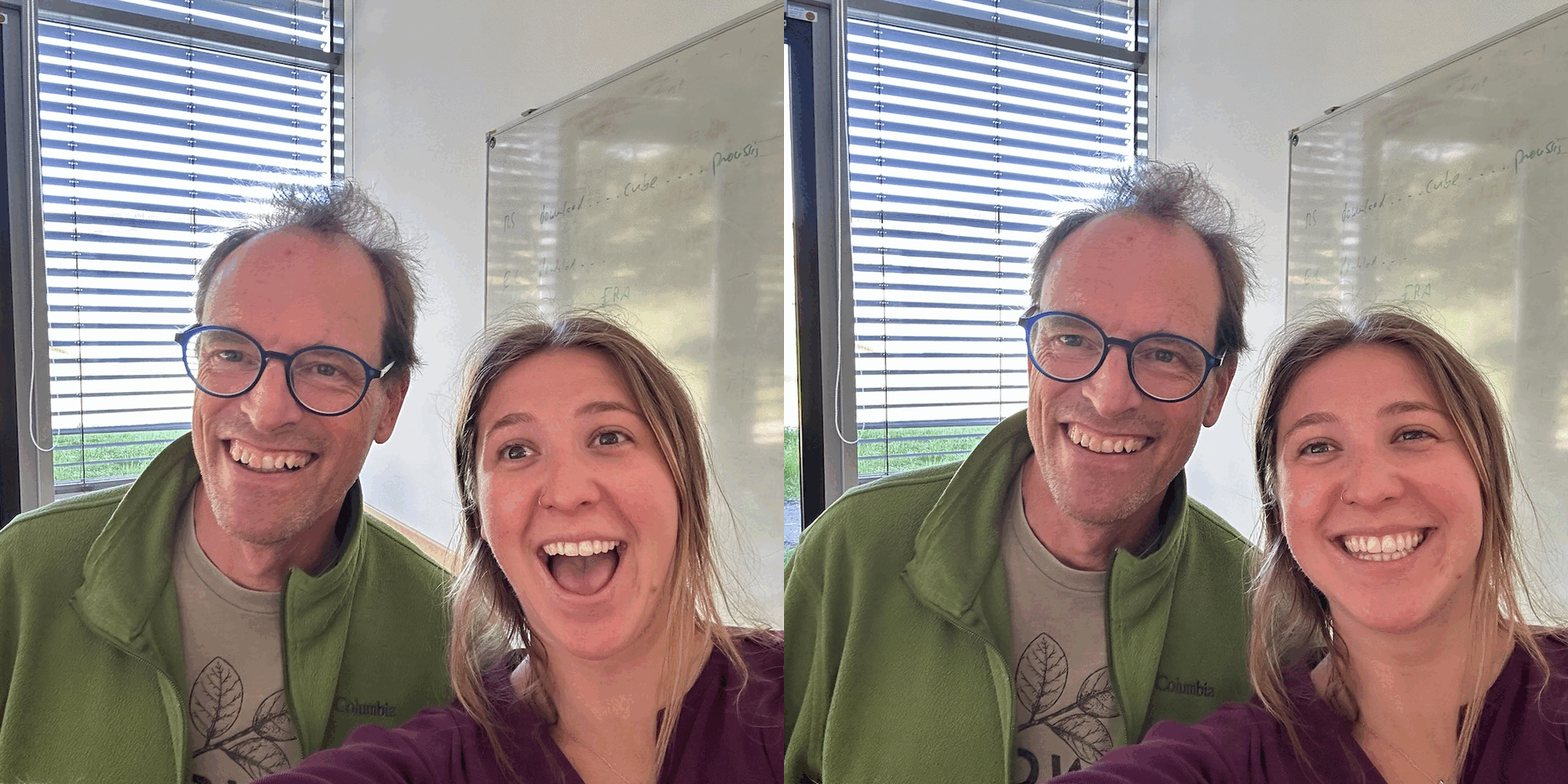
The GIF below shows Darby having some fun with MPI Director Markus Reichstein.

Visit from METER Group

For quite a few years, the lab has been using METER Group’s all-in-one meteorological sensor, which measures air temperature, relative humidity, solar radiation, precipitation, wind speed and direction, barometric pressure, lightning strike frequency and distance, and sensor tilt. We’ve had many of these instruments installed at sites in Arizona, Colorado, and New Mexico, for both long-term installations and short-term measurement campaigns.

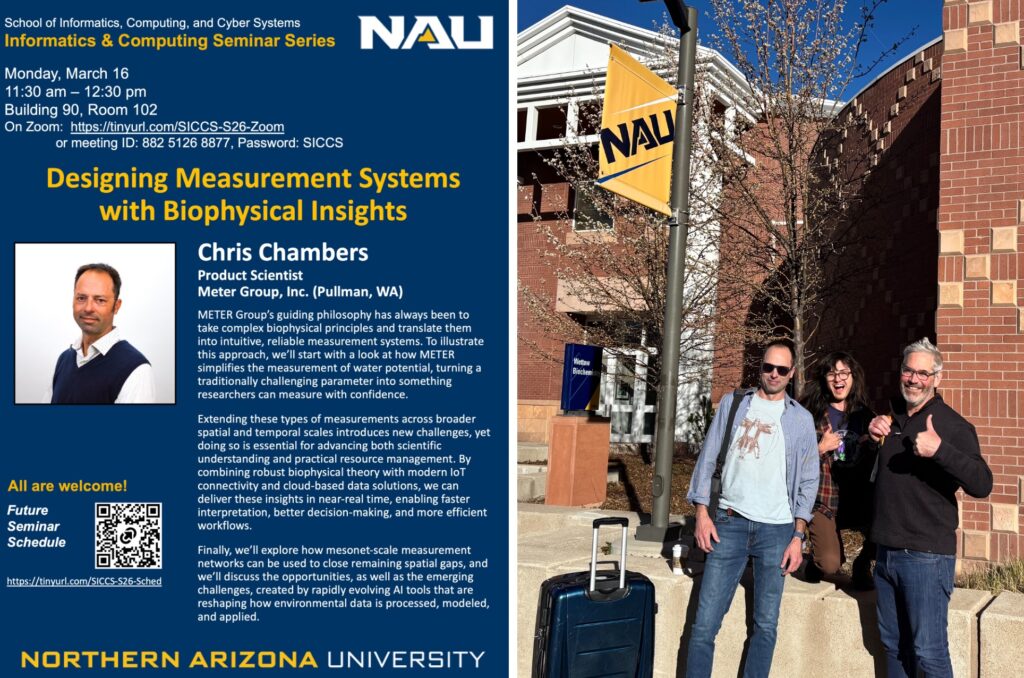
In mid-March, we had a visit from Chris Chambers and Carol McFarland from METER Group (formerly Decagon Devices). Chris gave a talk in the SICCS Informatics and Computing Weekly Seminar on “Designing measurement systems with biophysical insights”, and then after lunch at Martanne’s Burrito Palace, Chris and Carol held an “Office Hours” session where they were able to show off some of their new products to the NAU community. We then took a break for a well-attended happy hour “science session” at Mother Road.

After the visit, Carol noted that “it was lovely to learn more about your work, connect with some of your colleagues, enjoy some Flagstaff highlights, and meet your fantastic group of graduate students!”

Thanks to you both, Carol and Chris, for a fun and informative visit!

Dendrometer party in the redwoods

Andrew and George Koch traveled to Mendocino County, California, to meet up with colleagues from Lawrence Berkeley National Laboratory and UC Davis at the new redwood flux towers at Jackson Demonstration State Forest near Fort Bragg. With help from Housen Chu (LBNL) and Kosana Suvocarev (UC Davis), and their talented field crew, Andrew and George managed to get 61 automated point dendrometers and 11 soil moisture sensors installed within the footprints of the Parlin and Mitchell towers. Former Richardson Lab visitor Deklan Mengering is now part of the UC Davis team, and UC Davis PhD student Lily Klinek (who visited NAU in January) also showed up to lend a helping hand.

A special bonus was the visit by Dr. Aaron Teets (NAU PhD 2022), who dropped by at the end of the trip for a seafood dinner with Andrew and George.

Thanks to everyone who helped make this a remarkably successful outing!