Carbone Lab REU Delaney Watkins presents Snodgrass methane flux poster

Delaney Watkins, an NAU undergraduate and summer 2025 REU program participant hosted by Prof. Mariah Carbone, worked on the Snodgrass Mountain project funded by the DOE ESS program, on which Mariah is the lead PI and Andrew is a co-PI. Delaney measured soil fluxes of methane and carbon dioxide along the Snodgrass elevational gradient using the lab’s LI-7810 CO2/CH4/H2O trace gas analyzer, and found that in both aspen and conifer-dominated stands, subalpine forest soils were consistent methane sinks. She presented her poster on this work at the final NAU REU symposium in early August. Close to 10 Richardson-Carbone lab members showed up to hear about her work. Great job, Delaney, and we look forward to seeing you around the lab in the coming year!

WildWEST Summer Camp @ Historic Hat Ranch

Jacob, Jen, and Andrew made the trip out to NAU’s Historic Hat Ranch property, west of Williams, AZ, to participate in the WildWEST project’s 2025 Summer Camp. WildWEST (Wild-area-networks Wireless Enabling Science Team) is a $5m infrastructure project funded by NSF’s Office of Advanced Cyberinfrastructure and led by PI Scotty Strachan (a long-time PhenoCam collaborator) of the Nevada System of Higher Education. WildWEST aims to develop the infrastructure, and train workforces, needed to implement “end-to-end data transport solutions for science in remote and challenging environments.” Andrew is a collaborator on the project and serves as a member of the Science Stakeholder Use Case team; his talk focused on some of the challenges the lab has faced in developing two-way communications solutions for projects at the Bartlett AmeriFlux site, the Sevilleta LTER’s Mean-Variance Experiment, and redwood groves at Santa Lucia Preserve. Jen and Jacob had the opportunity to learn about current infrastructure technology and network with WildWEST project leads from Arizona, Utah, and Nevada.

Thanks to Scotty for inviting Andrew and lab members to participate! See you all again in 2026!

The photo shows Andrew, Jen, and Jacob outside of the HHR Straw Bale House.

Thermal image from Niwot Ridge camera published in Science

In early June, Science magazine published a special feature on how plants experience and cope with heat, and how this varies across spatial, temporal, and biological scales. The impacts of rising temperatures and extreme heat on vegetation are critical for ecosystem productivity and resilience, and the ecosystem services on which human society is highly reliant.

While lab members did not have a paper include in the special feature, we did score what might be the next coolest thing: a photograph from the FLIR thermal camera that Andrew and former postdoc Don Aubrecht had mounted on the Niwot Ridge AmeriFlux tower in 2015 (and which ran until 2021) was used in the lead-off article.

Plant temperatures – clearly a hot topic!

Calling all Snoddies!

In late June, Andrew joined “Team Snoddy 2025” (Mariah, Austin, and REU Delaney Watkins) on a week-long trip to the Rocky Mountain Biological Laboratory in Gothic, CO, to conduct research around Gothic (top photo) and on the nearby Snodgrass Mountain. The weather was perfect, and well-suited to replacing sensors, rewiring battery boxes, downloading dendrometer data, measuring soil CO2/CH4 fluxes (bottom photo, showing Delaney mastering the LI-COR 7810) , and inventorying trees. The tallest tree measured was a 34.5 m Engelmann spruce!

ALAN outweighs temperature in lengthening urban growing seasons

Ever wondered how artificial light at night (ALAN) and the urban heat island (UHI) together impact plant phenology? Check out the new paper (with Andrew as a coauthor) led by Lin Meng at Vanderbilt, “Artificial light at night outweighs temperature in lengthening urban growing seasons”, published this week in Nature Cities!

The figure below, from Lin’s paper, shows how increasing impervious fractions results in a concave quadratic increase of air temperature (Ta) and exponential increase of ALAN from rural to urban areas. The longer exposure to ALAN and higher Ta collectively contributes to a longer growing season, represented by the advancement of the SOS and delay of EOS in urban areas compared with rural areas.

Oscar participates in water & energy flux workshop

In mid-June, Oscar gave a tour of his equipment at the Cedar Mesa AmeriFlux site (also part of the Utah Flux Network) to a group of about 10 researchers and professionals who were part of the “Water & Energy Flux in the Desert” workshop led by Paul Inkenbrandt (Utah Geological Survey). A highlight for the participants was Oscar’s sap flow instruments, and discussion topics included how the collected data could be used to quantify specific components of the ecosystem water budget. Oscar noted, “Thank you to Paul for the opportunity and all workshop participants for their attention!”

The below photo shows Oscar giving a show-and-tell of one of his instrumented trees, which also features a Tomst dendrometer. Photo by Patrick Engberson. 

End-of-year lab lunch at Delhi Palace

To celebrate the end of the 2024-25 academic year, the Richardson and Carbone Labs went out for a group lunch at Delhi Palace. Although the famous lunch buffet is no longer offered, the curries and naan were amazing as always, and nobody went home hungry.

Thanks to all lab members for their efforts over the last 12 months, it’s been another great year. Best wishes to everyone for a productive but relaxing summer.

From L to R: Austin, Gena, Connor, Oscar, Mostafa, Jen, Perry, Yujie, Andrew, and Mariah (Jacob and Darby were unfortunately out of town). Note the Richardson Lab t-shirts that Oscar and Jen are sporting!

Perry attends final SPRUCE “All-Hands Meeting” in Minneapolis

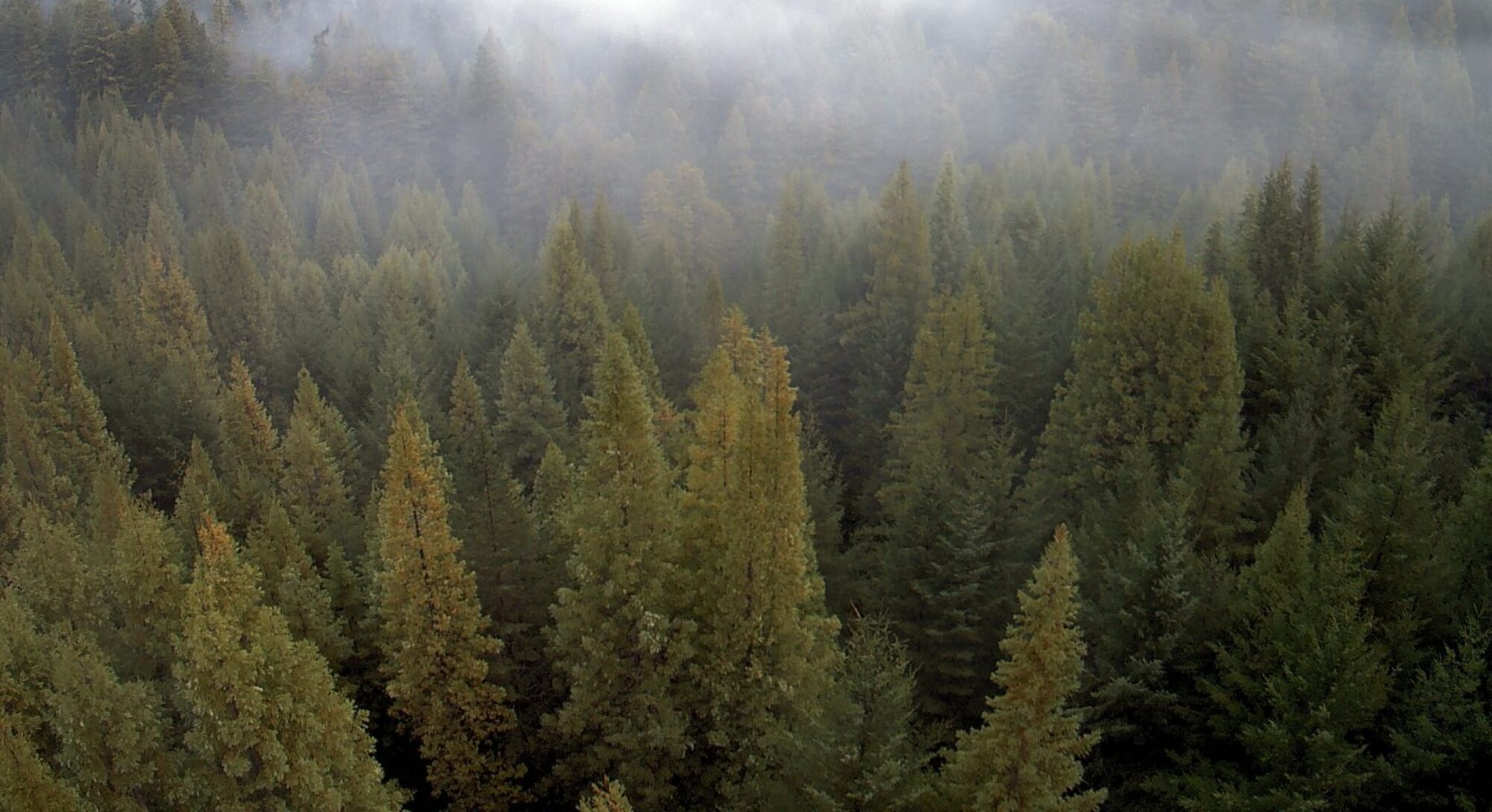
The Spruce and Peatland Responses to Changing Environments (SPRUCE) project is a whole-ecosystem warming and elevated CO2 experiment in the boreal peatland of Northern Minnesota’s Marcell Experimental Forest. The experiment has been running for 10 y (Andrew installed 10 PhenoCams at the site in August 2015), and treatments are scheduled to be turned off at the end of 2025.

In early May, project participants traveled to the Twin Cities for the final in-person SPRUCE “All-Hands Meeting,” which was packed with oral and poster presentations, and discussion groups to plan project syntheses, data-model comparisons, and final-year and post-treatment data collection. Perry was among the 26 poster presenters, and his poster detailed the phenological responses of leaves to warming observed through both PhenoCam and in-situ observations over the last 10 y. Perry also co-lead a group breakout discussion with Francisco Campos Arguedas (Kovaleski Lab, University of Wisconsin–Madison), where they posed questions related to the acute and chronic responses observed at SPRUCE (freeze events, heat waves, droughts, vs. long-term warming and elevated CO2).

After returning to NAU, Perry commented that attending the meeting had been a great experience, and though he found it intimidating at first (“I was so impressed by everyone’s research!”) he also quickly discovered that “everyone was super-nice.”

Thanks for a super job representing the lab, Perry!

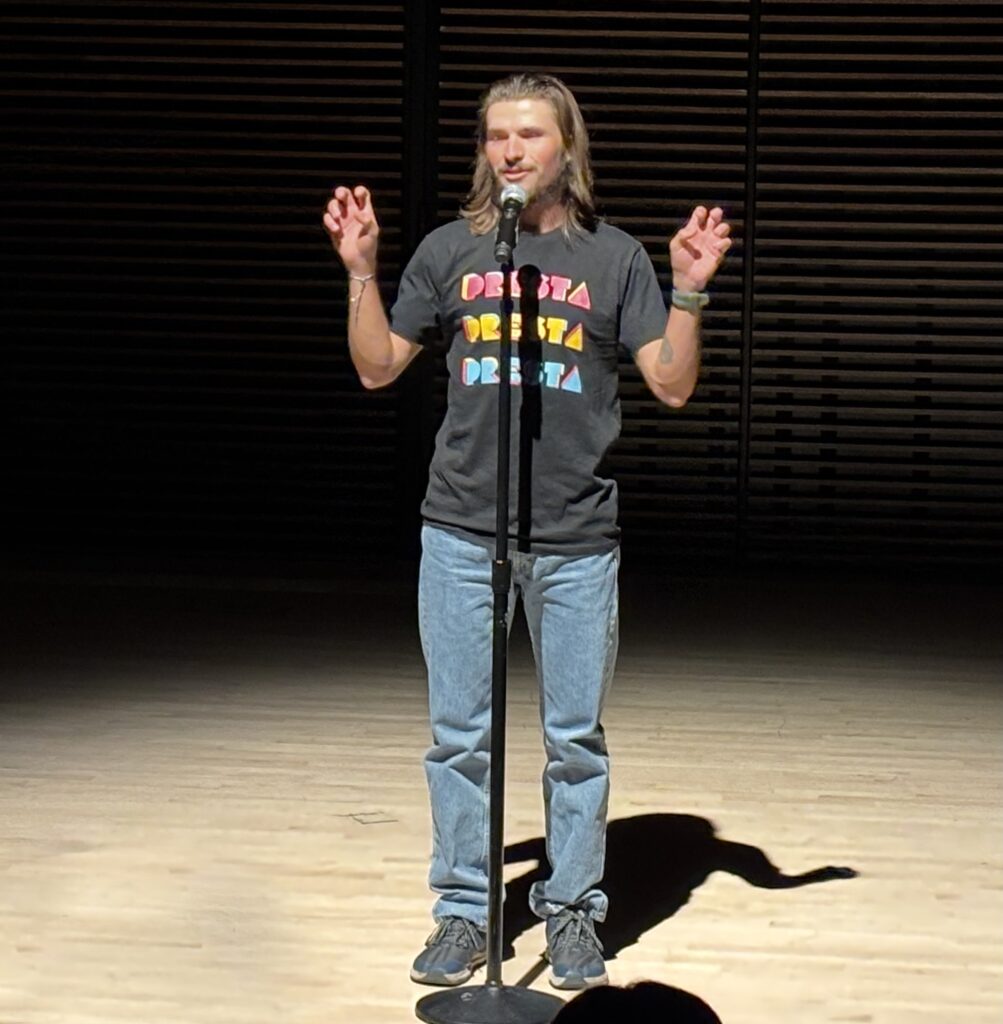
Jen presents at Gravity Lab’s April Collider

The Flagstaff Gravity Lab is a local organization whose mission is “to foster an environment that lowers the activation energy to create, build, and grow technology companies in the environmental, life science, and aerospace/astronomy segments.” Their monthly “Colliders” are networking events that foster connections and inspire collaboration within the Flagstaff innovation community, including NAU. This month, Jen wrapped up a series of presentations by SICCS graduate students with an energetic and accessible lightning talk titled “Getting Hot In Here: Thermal Remote Sensing of Plant Canopies​.” Great job, Jen!